
Morgan Housel Net Worth begins with a simple fact: Morgan Housel did not get rich by picking the next hot stock, timing the market, or selling a get-rich-quick course. He got rich slowly, quietly, and — fittingly for the man who wrote The Psychology of Money — by doing exactly what he tells his readers to do.
He wrote clearly about behaviour instead of brilliance. He stayed patient. He let a single book keep selling, year after year, in more than 60 languages, while he kept his day job as a partner at a venture capital firm and took a seat on the board of a serious investment company.
That is why Morgan Housel Net Worth is such a fascinating question, and also such a difficult one to answer with a single clean number. Housel has never published a personal balance sheet. He does not talk about his bank balance in interviews. He does not flaunt cars, watches, or houses. In fact, much of his writing is about how real wealth is invisible — it is the money you do not spend, the cars you do not buy, and the freedom you quietly build.
So what can we honestly say about Morgan Housel Net Worth in 2026? The careful answer is that Morgan Housel’s net worth is estimated at around $10 million, within a wider range of roughly $5 million to $15 million. That figure is an estimate, not a confirmed fact, and this article will show you exactly where it comes from, what parts of it can be checked in public filings, and what parts are still private.
In This Article
- Who Is Morgan Housel?
- Morgan Housel Net Worth in 2026: The Honest Estimate
- How Morgan Housel Made His Money: Book Royalties
- The Collaborative Fund: What His Partnership Is Worth
- Markel Group: Board Pay and Shares
- Speaking, Writing and Other Income
- Morgan Housel’s Early Life and Education
- Career: From The Motley Fool to The Wall Street Journal
- The Psychology of Money: The Book That Changed Everything
- Same As Ever and The Art of Spending Money
- Morgan Housel’s Personal Life, Family and Lifestyle
- Morgan Housel’s House, Cars and Investments
- Why Morgan Housel’s Net Worth Is So Hard to Pin Down
- What Morgan Housel Teaches About Wealth
- Frequently Asked Questions About Morgan Housel Net Worth
- Final Thoughts
Quick Facts
| Detail | Information |
|---|---|
| Full Name | Morgan Housel |
| Known For | Author of The Psychology of Money; Partner at Collaborative Fund |
| Estimated Net Worth (2026) | Around $10 million (estimate; wider range $5 million–$15 million) |
| Net Worth Status | Not confirmed by Housel; no public balance sheet |
| Main Income Sources | Book royalties, Collaborative Fund partnership, Markel Group board pay and shares, speaking |
| Books Sold | More than 13 million copies across his books, in 60+ languages (per his official/publisher bios, 2026); Markel proxy filings put the total nearer 11 million |
| Best-Known Book | The Psychology of Money (2020) |
| Other Books | Same As Ever (2023); The Art of Spending Money (2025) |
| Current Role | Partner at Collaborative Fund (since 2016) |
| Board Role | Independent director, Markel Group (since 2021) |
| Former Roles | Columnist, The Motley Fool; contributor, The Wall Street Journal |
| Education | B.A. in Economics, University of Southern California (2008) |
| Age | About 42 in 2026, based on Markel Group proxy filings cited in November 2026 profiles; his exact date of birth is not published in reliable publisher bios |
| Birthplace / Upbringing | Grew up near Lake Tahoe, California |
| Residence | Seattle, Washington, USA |
| Family | Married, with a wife and two children |
| Awards | Two-time Best in Business Award winner (Society of American Business Editors and Writers); New York Times Sidney Award winner; two-time Gerald Loeb Award finalist |
| Nationality | American |
| Profession | Author, financial writer, investor |
Who Is Morgan Housel?
Morgan Housel is an American author, financial writer, and investor best known for writing one of the most successful personal finance books of the modern era, The Psychology of Money.
He is a partner at Collaborative Fund, a venture capital firm, a position he has held since 2016. He also sits on the board of directors at Markel Group, a global specialty insurance and investment holding company, a role he took up in 2021.
Before those roles, Housel spent more than a decade as a financial journalist. He was a columnist at The Motley Fool, where he wrote thousands of articles about investing, business, and economic history, and a contributor to The Wall Street Journal.
What makes Housel different from most finance writers is his subject. He does not write mainly about which stocks to buy or how to read a balance sheet. He writes about people — about greed, fear, envy, patience, luck, risk, and the strange ways our brains handle money. His central argument, repeated across his books and essays, is simple and radical at the same time: doing well with money has surprisingly little to do with how smart you are, and a lot to do with how you behave.
That idea landed at exactly the right moment. The Psychology of Money was published in September 2020, in the middle of a pandemic that had forced millions of people to think hard about savings, jobs, and security. Readers who had never finished a finance book before finished his. Then they recommended it to friends, bought copies as gifts, and kept it selling for years, long after most business books fade away.
Today Housel is widely described as one of the most-read personal finance authors alive. His books have been translated into more than 60 languages and, according to his official and publisher biographies in 2026, have sold more than 13 million copies in total. That scale of success is rare for any author, let alone one writing about investor psychology, and it is the main reason his wealth is now a subject of public curiosity.
Yet Housel himself remains deliberately low-key. His publisher biography says simply that he lives in Seattle with his wife and two kids. He does not post about luxury purchases. He has said in his own writing that his family’s wealth is essentially a paid-off house, a checking account with a lot of cash in it, and Vanguard index funds. Whether that description is still literally true after several more years of bestseller royalties is impossible to verify from the outside — and that, in a way, is the point of his work.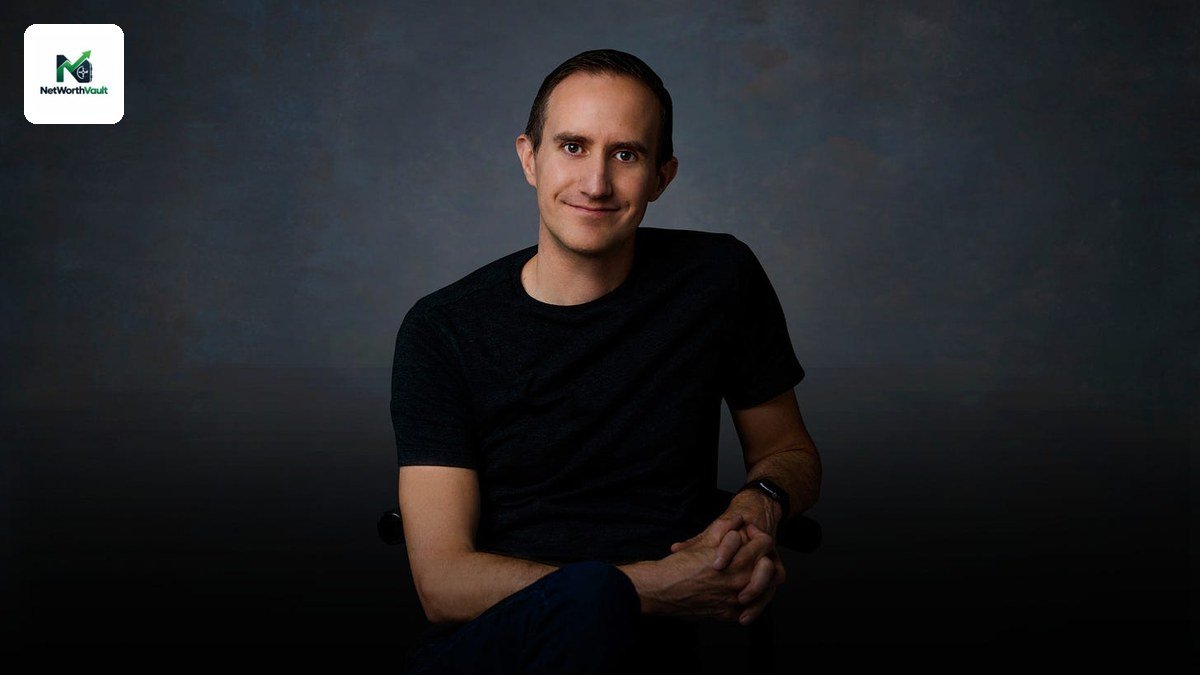
Morgan Housel Net Worth in 2026: The Honest Estimate
Let us be direct about this, because most net worth pages on the internet are not.
Morgan Housel Net Worth in 2026 is estimated at around $10 million. A careful range, based on the best available public information, is roughly $5 million to $15 million.
That is not a number Housel has confirmed. He has not disclosed his income, his investments, his fund earnings, or his tax returns. No major financial publication such as Forbes or Bloomberg lists him as a billionaire or tracks his fortune, because he does not own a public company and his wealth is private.
So where does the $10 million figure come from? It comes from adding up the pieces that can be checked, and making reasonable, clearly labelled estimates for the pieces that cannot.
The most careful recent profile, published by Jitendra.co in November 2026, puts it this way: as of 2026, Morgan Housel’s net worth is estimated at about $5 million to $15 million, with careful write-ups centring near $10 million. Other profiles agree with that centre point. TheMost10, in a profile published in April 2025, lists his 2026 net worth at $10 million. A separate analysis by DiffSense builds a wider range of $10 million to $20 million from the same building blocks — book royalties, a fund stake, a house, and public equities — but its own breakdown shows how much guesswork is involved in the top end of that range.
At the other extreme, some low-quality sites publish figures under $1 million, or invent nine-figure guesses with no workings at all. Both should be ignored. A figure under $1 million makes no sense for an author who has sold more than 11 million books, and a figure in the hundreds of millions would require royalty rates, fund payouts, or shareholdings that no public record supports.
The honest picture, then, is a range with a midpoint. Think of $10 million as a working estimate — a sensible centre based on book sales, board pay, and a fund partnership — not as a bank balance anyone has seen.
It is also worth saying what that $10 million is not. It is not a salary. Housel does not earn $10 million a year. It is an estimate of everything he owns, minus everything he owes, built up over a career that began in journalism in the late 2000s and changed completely when his first book became a global bestseller in 2020.
How Morgan Housel Made His Money: Book Royalties
Book royalties are almost certainly the largest single source of Morgan Housel’s wealth, and also the hardest to calculate precisely.
Here is what we know for certain. His books have sold in very large numbers. His official website and publisher biographies said in 2026 that his books have sold more than 13 million copies and have been translated into more than 60 languages. Markel Group’s latest proxy statement, a formal filing with the U.S. Securities and Exchange Commission, put the total nearer 11 million copies — a slightly lower number that probably reflects a different counting date, and shows how fast the total has been moving.
Either way, 11 million to 13 million copies is an extraordinary figure for a finance author. For comparison, most bestselling business books are delighted to sell a few hundred thousand copies in total.
What we do not know is how much Housel earns per copy. That depends on the format — hardcover, paperback, ebook, or audiobook — the retail price, the discount, the country, the translation deal, his agent’s commission, and the terms of his publishing contracts, none of which are public.
One useful illustration comes from the November 2026 Jitendra.co profile, which notes that at just $0.50 earned per copy, 13 million copies would gross about $6.5 million before agent fees and taxes. At $1 per copy, the gross would be about $13 million. At a lower rate, it would be less. The real average is somewhere in that kind of range, spread across several years, after tax, and shared in ways we cannot see — for example, co-edition and translation income is often split differently from a standard U.S. hardcover royalty.
What that tells us is that royalties alone could plausibly account for several million dollars of Housel’s wealth, even after tax and fees, and that they keep coming. The Psychology of Money did not spike and disappear. It has been a No. 1 indie personal finance bestseller in 2024, 2025, and 2026, according to bestseller lists reviewed in November 2026, and his third book, The Art of Spending Money, was already No. 3 on the same list in early 2026. A book that sells steadily for six years produces a very different financial result from a book that sells for six months.
Royalties, in other words, are the engine of the Morgan Housel net worth story. They are also the reason any precise figure should be treated with caution. We know the volume is huge. We do not know the rate per copy. Anyone who gives you an exact royalty total without explaining that gap is guessing.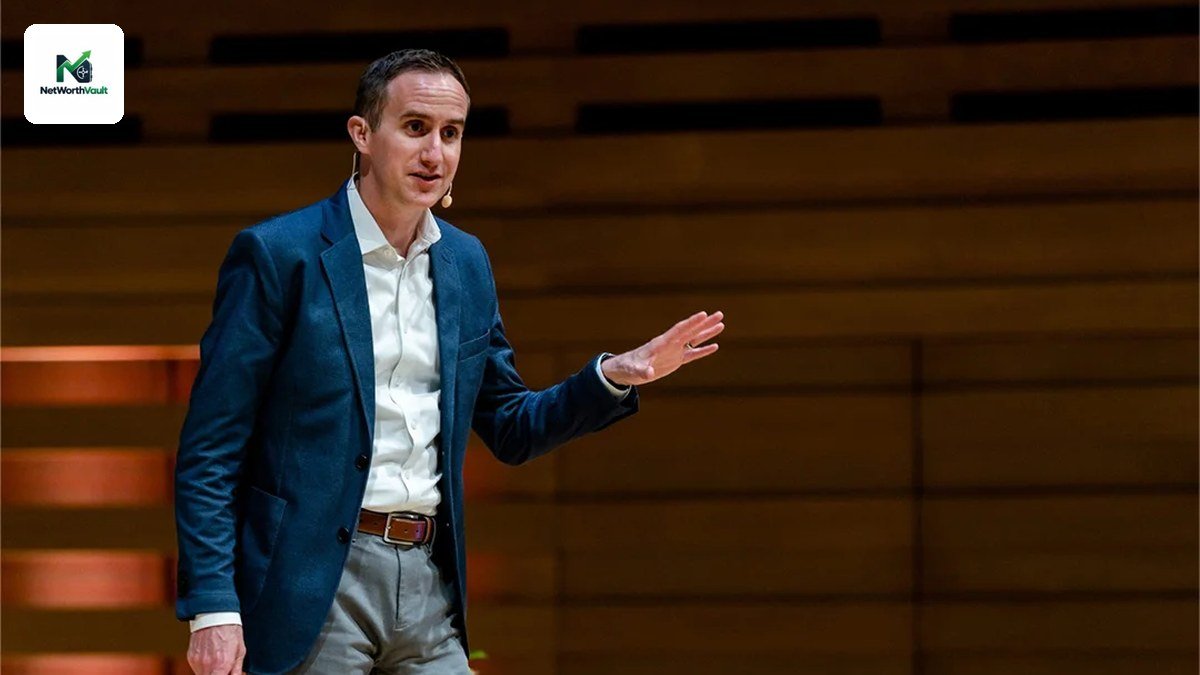
The Collaborative Fund: What His Partnership Is Worth
Housel’s second major source of wealth is his job — or, more accurately, his partnership.
He became a partner at Collaborative Fund in 2016. Collaborative Fund is a venture capital firm that backs early-stage companies, with a stated focus on businesses at the intersection of capital and culture, and on a more shared and sustainable form of prosperity. One profile describes the firm as managing over $500 million in assets, although that figure is now several years old and the firm’s current assets under management are not published in a way that lets outsiders value a single partner’s stake.
That is the key problem with valuing this part of his wealth. A partner in a venture capital firm typically earns a salary, a share of the firm’s management fees, and — most importantly over time — a share of the profits when the firm’s investments succeed, known as carried interest. How large that share is depends on the partnership agreement, the size of each fund, and how well the underlying companies perform. None of that is public for Collaborative Fund, and Housel has never discussed his compensation there.
So we can say with confidence that the partnership is a significant and ongoing source of income, and that it probably contributes several million dollars to his overall net worth over a decade. We cannot say whether that contribution is $2 million, $5 million, or $7 million. The DiffSense analysis, for example, puts a $3 million to $7 million range on his Collaborative Fund stake, but that is an illustrative estimate built on assumptions about fund performance, not a figure from a filing or a disclosure.
What we can say is that the partnership matters in a second, less obvious way. It gives Housel a front-row seat to how companies are built, funded, and valued, and it gives him credibility as an investor, not just a writer about investing. That credibility helped his books, his speaking career, and his board appointment, and all of those feed back into his wealth.
It also explains why Housel did not quit his day job when his first book became a hit. For him, the fund is not a side hustle. It is the work he was doing before the book, and the work he has kept doing since.
Markel Group: Board Pay and Shares
The one part of Morgan Housel’s wealth that can be checked in hard numbers is his role at Markel Group.
Housel was appointed as an independent director of Markel Group — formerly Markel Corporation — in 2021. Markel is a global specialty insurance and investment holding company, sometimes described by commentators as a smaller version of Berkshire Hathaway, because it combines an insurance business with a large investment portfolio.
As a public company director, Housel’s pay and shareholdings are disclosed in Markel’s filings with the U.S. Securities and Exchange Commission. Those filings are the most reliable facts we have about his money.
According to the November 2026 Jitendra.co review of those filings, Markel’s board pay for Housel was near $301,000 in the most recent disclosed year, made up of a retainer, a stock award, a plan discount, and a charity match. That is a substantial sum for a part-time board role, but it is not, on its own, what makes someone worth $10 million.
The shares matter more. The same review notes that Housel held roughly 1,000 Markel shares across proxy and Form 4 updates, and that at recent prices that holding had been valued near $1.8 million. Markel’s share price moves, so that value moves with it — an earlier estimate, from DiffSense in early 2026, valued his Markel holding at roughly $700,000, which shows how much the number can change with the share price and the counting date. The direction of travel, though, is clear: his stake has been growing as he receives stock awards for his board service, and it is now a seven-figure holding in its own right.
Two things are worth noting about this. First, Markel shares are the only asset of Housel’s that outsiders can actually count, because the law requires directors to disclose them. Second, the board role is itself a sign of how his reputation has grown. Companies do not appoint bestselling authors to their boards as a favour. They appoint people whose judgement about risk, capital, and human behaviour they trust. Housel’s writing is, in effect, his qualification.
Speaking, Writing and Other Income
Beyond books, the fund, and Markel, Housel earns money as a keynote speaker on behavioural finance, listed by major speaker bureaus including Chartwell Speakers and All American Speakers. That long, steady writing career is a reminder that lasting influence is usually built article by article — a very different route from the media career of Ben Meiselas, whose public profile grew through law and political commentary.
Bureaus do not publish his fee, and he has never disclosed it, so any specific fee quoted online should be treated as unverified. He also still writes essays on the Collaborative Fund blog. There is no reliable public evidence of significant income from a paid newsletter, a course, brand endorsements, or a YouTube channel. His wealth, as far as the public record shows, comes from a small number of serious sources — books, a fund partnership, and a board seat — rather than a sprawling set of side businesses.
Morgan Housel’s Early Life and Education
Morgan Housel grew up near Lake Tahoe, California, in the Sierra Nevada mountains. His parents were an emergency room doctor and an emergency room nurse, who had met on a hippie commune in Tennessee in the 1970s, according to a profile based on his own accounts.
That background matters to his writing in a way that is easy to miss. Housel did not grow up in a finance family, and he did not go to Wall Street straight from university. He grew up in a mountain town, in a household where both parents worked in emergency medicine — a world of quick decisions, uncertainty, and human behaviour under pressure. It is not hard to see where his interest in how people behave when the stakes are high began.
He studied economics at the University of Southern California, earning a B.A. in Economics. University records cited in professional profiles list his time at USC as 2005 to 2008, and he graduated in 2008 — which meant, as one profile puts it, that he entered the job market at the precise moment global finance was melting down in the financial crisis.
That timing shaped his career. He had already started writing for The Motley Fool while still a student, covering banking for a few dollars per article. When the crisis hit, he was a young writer watching the financial system fail in real time, and writing about it for readers who were frightened and confused. That experience — of explaining a crisis as it happened, to ordinary people — became the foundation of everything he wrote afterwards.
A note on his age: low-quality sites variously claim he was born in 1990 or in 1973, but neither fits the verifiable record — he graduated from university in 2008. The most credible guide is Markel Group’s proxy filings, which profiles in November 2026 used to put his age at about 42. His exact date of birth is not in his publisher biographies, so it is not stated here.
Career: From The Motley Fool to The Wall Street Journal
Housel’s career can be divided into two clear halves: a decade as a financial journalist, and then a decade as an author and investor.
He began at The Motley Fool, the investment advice company, while still at USC. He stayed there for many years, rising to Senior Analyst at Motley Fool One in 2013, a role he held until 2016. During that time he wrote extensively about investing, business, and economic history, and he became known for a clear, story-driven style that made complicated ideas feel human.
He also contributed to The Wall Street Journal, writing about financial decision-making and market behaviour for a mainstream audience. That work brought him to the attention of readers beyond the investing world, and it brought him awards. He is a two-time winner of the Best in Business Award from the Society of American Business Editors and Writers, a winner of the New York Times Sidney Award, and a two-time finalist for the Gerald Loeb Award for Distinguished Business and Financial Journalism — one of the most respected prizes in business writing.
In 2016, he left full-time journalism to become a partner at Collaborative Fund. That move is often described as a career change, but in Housel’s case it was more like a change of vantage point. At the fund, he was no longer just writing about investors. He was working alongside them, seeing how investment decisions are actually made, and how often they are driven by temperament, incentives, and fear rather than by spreadsheets.
That experience fed directly into his books. The Psychology of Money is, in many ways, a journalist’s book written by someone who had spent a decade interviewing and observing investors, and then spent several more years investing alongside them. It is not a textbook. It is a collection of stories, and the stories are the argument.
Housel has never returned to full-time journalism, but he has never really stopped writing either. His essays, his books, and his talks are all part of the same project: explaining why people do what they do with money, and why knowing the right answer is not the same as doing the right thing.
The Psychology of Money: The Book That Changed Everything
The Psychology of Money: Timeless Lessons on Wealth, Greed, and Happiness was published in September 2020 by Harriman House. It grew out of an essay of the same name that Housel posted on the Collaborative Fund blog on 1 June 2018, setting out twenty flaws and biases he had observed in years of studying investors. The book has 20 short chapters, each telling a story — a janitor who quietly became a millionaire, a lottery winner who lost everything — and drawing a lesson from it.
Its best-known ideas are that wealth is what you do not see, that saving is less about income than humility, that the hardest skill is not getting rich but staying rich, and that the highest dividend money pays is control over your own time. The book became a New York Times bestseller and kept selling: a No. 1 indie personal finance bestseller in 2024, 2025, and 2026. That long tail is what separates a genuine bestseller from a brief hit, and it is why Housel’s royalties did not stop when the initial publicity faded.
Same As Ever and The Art of Spending Money
Housel’s second book, Same As Ever: A Guide to What Never Changes (2023), became an instant New York Times bestseller. It argues that while technology and markets change constantly, the things that drive people — greed, fear, envy, status — never change. His third book, The Art of Spending Money: Simple Choices for a Richer Life, was published on 7 October 2025 by Portfolio in the United States.
It asks what wealth is for, arguing that money buys the most happiness when spent on time, experiences with people you love, and health, rather than on status. By early 2026 it was already No. 3 on the ABA Indie Personal Finance Bestseller List. A third major title means a third stream of royalties, and a third reason for readers to discover his earlier books.
Morgan Housel’s Personal Life, Family and Lifestyle
Morgan Housel is married and lives in Seattle, Washington, with his wife and two children. That is the extent of what his publisher biography says about his family, and it is the extent of what this article will say. His wife’s name and his children’s names are not part of his public professional biography, and they are not needed to understand his wealth or his work.
What is public, because Housel has written about it himself, is his approach to family life and to money at home. He has written about buying his first home with his wife in June 2016, when their son was six months old, and about the trade-offs his family has made since — including his wife leaving the workforce to become a stay-at-home mother when their daughter was born, as he mentioned in a 2023 interview.
He has also written, with unusual honesty, about how miserable his twenties felt at the time, even though he now looks back on them with nostalgia. In his twenties, he has said, he hated the uncertainty, worried constantly about money, and desperately needed validation from others. Only in retrospect did he realise how much of that worry was wasted. That kind of candour is rare among successful authors, and it is part of why readers trust him.
His lifestyle, as far as it can be observed, is deliberately ordinary. He does not post about luxury cars, expensive watches, or exotic holidays. He has said that his biggest regret is not having more children — he and his wife have two, and he has said he often wonders what life would have been like with four — which tells you more about what he values than any list of possessions would.
That ordinariness is not an act. It is the point. Housel’s argument is that the people who look rich are often not rich, because they have spent their money on looking rich, while the people who are actually rich often look ordinary, because they have kept their money invested and compounding. His own life appears to follow that rule.
Morgan Housel’s House, Cars and Investments
This is the section where many net worth articles invent details. This one will not. Housel has said in his own writing that his family owns their home without a mortgage, and that their wealth is essentially a paid-off house, a checking account with a lot of cash in it, and Vanguard index funds. Beyond that, there is no reliable public record of the value of his house, the cars he drives, or the exact contents of his portfolio, and none should be invented here. His house is in Seattle, an expensive market, so a paid-off family home there is a significant asset, but its value is not publicly stated. His one disclosed individual shareholding is his Markel Group stock, worth around $1.8 million at recent prices according to the November 2026 review of Markel filings, although that value moves with the share price. There is no credible evidence that he owns a fleet of luxury cars or multiple investment properties — and if he did, it would contradict everything he has written for twenty years.
Why Morgan Housel’s Net Worth Is So Hard to Pin Down
An exact figure is impossible, for four reasons. Book royalties are private: we know 11 million to 13 million copies have sold, but not the rate per copy. Fund earnings are private: a venture partner’s share depends on agreements and performance that are never published. Investments are private, apart from his disclosed Markel shares. And Housel himself does not want to be measured by his net worth — his whole argument is that chasing a bigger number for its own sake is a trap.
That is why this article gives a range and a midpoint, not a single definitive number. The honest answer is that Morgan Housel is worth around $10 million in 2026, and that the range around it reflects the different ways you can add up the same public pieces. That is also why so many other profiles disagree so wildly: they pick different pieces, or they add the pieces up differently.
Diljit Dosanjh’s net worth, for example, is often estimated at a different scale entirely, because his wealth is built on film and music rather than on a fund stake, board pay, and a long-tail backlist. The same logic applies to the very different numbers that other profiles attach to Morgan Housel, depending on whether they count his books, his fund, his board role, or his house.
For a sense of how different that path is from fame-driven wealth, compare it with the very different careers covered on this site, from Taylor Swift to Logan Paul. Their fortunes are built on tours, streams, and public attention. Housel’s is built on patience, and on a book that people keep buying because it keeps being useful.
What Morgan Housel Teaches About Wealth
Housel’s ideas are more useful than his net worth number. Wealth is invisible — it is the money you do not spend. Behaviour beats intelligence: patience and humility matter more than a high IQ. Saving is about humility, not income. Time is the highest dividend money pays. Knowing when you have enough is a skill, and compounding needs patience above all. Those ideas describe his own career: a writer who kept writing, an investor who kept investing in index funds, and an author who let a good book compound for six years instead of chasing the next trend.
Frequently Asked Questions About Morgan Housel Net Worth
What is Morgan Housel’s net worth in 2026?
Morgan Housel’s net worth in 2026 is estimated at around $10 million, within a wider range of roughly $5 million to $15 million. That figure is an estimate based on book sales, his Collaborative Fund partnership, and his Markel Group board pay and shares. It has not been confirmed by Housel, and he has never published a personal balance sheet.
How did Morgan Housel make his money?
He made his money mainly from book royalties, especially from The Psychology of Money, which has sold more than 11 million to 13 million copies in total across his books, in more than 60 languages. He also earns money as a partner at Collaborative Fund, as a board director at Markel Group, and from speaking engagements.
How many copies has The Psychology of Money sold?
Housel’s books in total have sold more than 13 million copies, according to his official and publisher biographies in 2026, in more than 60 languages. Markel Group’s latest proxy filing put the total nearer 11 million copies, which likely reflects a different counting date. The vast majority of those sales are from The Psychology of Money, first published in 2020.
What is Morgan Housel’s salary at Collaborative Fund?
His salary and partnership earnings at Collaborative Fund are not public. Partners in venture capital firms typically earn a salary plus a share of fees and investment profits, but the size of Housel’s share has never been disclosed, so no reliable salary figure can be given.
How much does Morgan Housel earn from Markel Group?
As an independent director of Markel Group, his board pay was near $301,000 in the most recent disclosed year, according to a November 2026 review of Markel filings, made up of a retainer, a stock award, a plan discount, and a charity match. He also held roughly 1,000 Markel shares, valued near $1.8 million at recent prices in that review, although the value moves with the share price.
Is Morgan Housel a billionaire?
No. There is no credible evidence that Morgan Housel is a billionaire, and no major wealth tracker lists him as one. His estimated net worth of around $10 million is substantial, but it is far below billionaire level. Claims that he is worth hundreds of millions or billions are not supported by any public record.
Where does Morgan Housel live?
He lives in Seattle, Washington, with his wife and two children, according to his publisher biography. He grew up near Lake Tahoe, California, and studied economics at the University of Southern California.
Final Thoughts
Morgan Housel is a rare kind of wealthy person: someone who became rich by telling people that getting rich is not the point.
His estimated net worth of around $10 million in 2026 — within a range of $5 million to $15 million — is a genuine fortune, built on a bestselling book, a venture capital partnership, and a board seat at a respected investment company. It is also, by the standards of celebrity wealth, a modest fortune. He is not a billionaire. He does not own a sports team, a private jet, or a social media empire. He owns books that keep selling, shares that keep growing, and time that he controls.
That is exactly the life he recommends. In his writing, the goal of money is not to buy the most impressive things. It is to buy freedom, security, and the ability to spend your days on what matters to you. By that measure, Housel has succeeded — not because his net worth is $10 million, but because he built that wealth without abandoning the principles he writes about.
For readers, the lesson is not to copy his exact portfolio or to chase his exact number. It is to copy his behaviour: write or build something useful, be patient, live below your means, invest simply, and let time do the heavy lifting. That is a slower path to wealth than the ones you see on social media, but as Housel’s own story shows, it is a path that actually works.
If you found this story useful, you can explore more ideas about money, wealth, and the psychology behind it on Pinterest — see Morgan Housel net worth ideas on Pinterest.
Disclaimer: All net worth figures in this article are estimates based on publicly available information as of November 2026. Morgan Housel has not publicly confirmed his net worth, and no personal balance sheet, tax return, or audited financial statement is available. Figures should be treated as estimates, not as confirmed facts.