
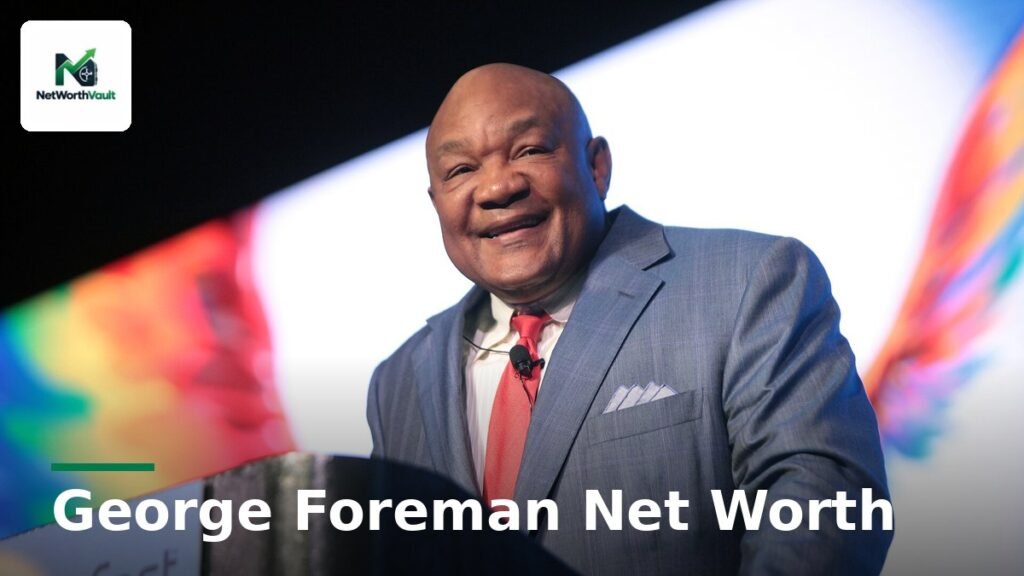
George Foreman Net Worth is one of the great rags-to-riches stories in American sport, with a twist: the boxer made far more money selling a kitchen grill than he ever made throwing punches. According to Celebrity Net Worth, his net worth was estimated at $300 million when he died on March 21, 2025, at 76. Almost all of it came from the George Foreman Grill, which sold more than 100 million units worldwide.
Foreman was a two-time heavyweight champion, an Olympic gold medallist, and the oldest man ever to win the heavyweight title, at 45. But his boxing purses added up to a fraction of what the grill paid him. This article explains how a preacher from Houston’s Fifth Ward turned a profit-share deal on a small electric grill into one of the largest fortunes any boxer has ever made.
In This Article
- Who Is George Foreman?
- George Foreman Net Worth in 2026: The $300 Million Estimate Explained
- How We Calculate Net Worth
- Early Life in Houston’s Fifth Ward
- Olympic Gold and the Rise of a Champion
- The Rumble in the Jungle and the First Retirement
- The Comeback: Oldest Heavyweight Champion at 45
- The George Foreman Grill: The Deal That Made the Fortune
- Boxing Earnings vs. Grill Earnings
- Other Business Ventures, Broadcasting and Books
- Real Estate and Other Assets
- Personal Life: Faith, Family, and Twelve Children
- Final Thoughts
Quick Facts
| Detail | Information |
|---|---|
| Full Name | George Edward Foreman |
| Date of Birth | January 10, 1949 |
| Date of Death | March 21, 2025 (aged 76) |
| Birthplace | Marshall, Texas, USA |
| Nationality | American |
| Occupation | Professional boxer, entrepreneur, minister, television personality |
| Years Active | 1968–1997 (boxing); 1994–2025 (business) |
| Height | 6 ft 3 in (1.92 m) — widely reported |
| Spouse | Mary Joan Martelly (married 1985; his fifth wife) |
| Children | 12 — including five sons, all named George |
| Best Known For | Two-time heavyweight champion, Olympic gold medallist, the George Foreman Grill |
| Boxing Record | 76 wins (68 by knockout), 5 losses |
| Estimated Net Worth | $300 million at death (Celebrity Net Worth, March 2025) |
| Grill Earnings | More than $200 million, including a $137.5 million buyout in 1999 |
| Main Income Sources | George Foreman Grill royalties and buyout, boxing purses, endorsements, broadcasting |
| Honours | Olympic gold 1968; International Boxing Hall of Fame (inducted 2003) |
Who Is George Foreman?
George Edward Foreman was an American boxer, businessman and minister whose life had two acts, and the second paid far better than the first. In the first, he was one of the most feared punchers in boxing history: Olympic gold medallist at nineteen, heavyweight champion at twenty-four, the man who knocked down Joe Frazier six times in two rounds, and the man Muhammad Ali beat in the “Rumble in the Jungle” in 1974. In the second, he was the smiling, gentle preacher on television selling a small electric grill — and that grill made him one of the richest athletes who ever lived.
Foreman’s story is unusual because the two acts were separated by ten years out of the ring. After losing to Jimmy Young in 1977, he retired, became an ordained minister, and spent a decade preaching in Houston and running a youth centre. When he came back in 1987, at 38 and out of shape, the boxing world laughed. Seven years later, at 45, he knocked out Michael Moorer to regain the heavyweight title. The comeback made him a beloved figure — warm, funny, self-deprecating — and that popularity was exactly what made the grill deal work.
The grill launched in 1994, the same year as the Moorer fight, and it turned Foreman from a famous ex-champion into a wealthy businessman. He took a share of the profit on every grill sold instead of a flat fee, and at the peak he was reportedly earning $4.5 million a month. In 1999, the grill’s maker bought out his name rights for $137.5 million. By the time he died in March 2025, Celebrity Net Worth put his fortune at $300 million — a number built almost entirely on a kitchen appliance.
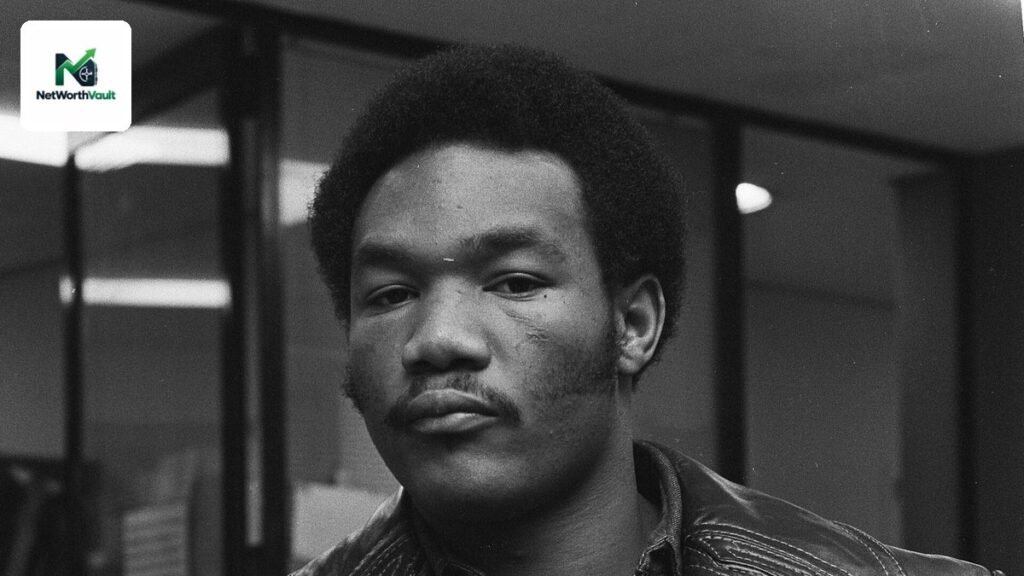
George Foreman Net Worth in 2026: The $300 Million Estimate Explained
George Foreman Net Worth is estimated at $300 million, according to Celebrity Net Worth, and the figure is a posthumous one: it describes the estate he left behind when he died on March 21, 2025, at 76. There is no “2026 net worth” in the usual sense — the $300 million is the value of his wealth at death, and it has held steady across 2025 and 2026 profiles because the royalty streams behind it continue to pay his estate.
That is the George Foreman Net Worth figure we use as our headline estimate, because Celebrity Net Worth is the most widely cited source for celebrity wealth, and because it is consistent with the documented facts of the grill deal. Other 2026 profiles agree: BounceMojo, in a profile updated in September 2026, also gives $300 million, as do FastBull and several other trackers. There is no serious competing figure — no site puts him at $100 million or $500 million. The consensus is unusually tight for a celebrity wealth estimate, and the reason is that the grill money is unusually well documented.
Here is the shape of the fortune. The grill earned him well over $200 million in total, by every published account: more than $200 million through 2011 according to Wikipedia, about $240 million according to Yahoo Finance, and more than $250 million according to Celebrity Net Worth. The largest piece was the 1999 buyout, when Salton Inc. paid $137.5 million — $127.5 million in cash and $10 million in stock — for the perpetual right to use his name. The rest came from years of royalties on more than 100 million grills sold worldwide.
His boxing career, by contrast, contributed a small share to George Foreman Net Worth. Career purses across both halves of his boxing life are estimated at roughly $50 million to $60 million in total, before tax, trainers’ cuts and expenses. Foreman has said he set aside about $5 million from his first career, between 1969 and 1977, and that poor investments wiped out much of it. He came back to boxing in 1987 partly because he needed the money — to fund his youth centre and his church — and the comeback purses rebuilt his finances. But even they were modest next to the grill money. The honest summary is that boxing made Foreman famous, and the grill made him rich.
How We Calculate Net Worth
At Net Worth Vault, we calculate George Foreman Net Worth by adding up the income we can verify from public sources, estimating the value of known businesses and assets, and then subtracting typical taxes, fees and living costs. For George Foreman, that calculation is more solid than it is for most celebrities, because the largest single number — the $137.5 million buyout — is a matter of public record, reported by multiple sources.
The grill math is the core of the George Foreman Net Worth estimate. Foreman’s deal with Salton gave him a share of the profit on every grill sold, reported at around 40 percent by a 2004 Businessweek report, with some accounts putting it at 45 percent. At the peak he was reportedly earning about $4.5 million a month, according to Wikipedia, and Foreman himself has put the peak at $5 million a month, with some reports going as high as $8 million. Those royalties ran for five years before the 1999 buyout — $127.5 million in cash and $10 million in stock — the single largest payday of his life. Royalties and buyout together put the grill conservatively above $200 million.
The boxing math is smaller and less precise. His first career, from 1969 to 1977, included the Frazier, Norton and Ali fights, but purses in the 1970s were far smaller than today, and Foreman has said he kept little of what he earned. His comeback career, from 1987 to 1997, included the Moorer title win and several pay-per-view fights, and those purses were larger — but they still add up to tens of millions, not hundreds.
The same discipline applies to other profiles we publish — Brooks Koepka’s net worth is built on golf prize money and LIV Golf payments, a very different kind of sports income, but it shows the same need to separate gross career earnings from the wealth an athlete actually keeps. Even so, the boxing math is only a small part of George Foreman Net Worth.
We cannot value the estate precisely. No public inventory has been published, and no probate value is available. The $300 million George Foreman Net Worth figure is therefore a third-party estimate, not an audited statement — but it is built on documented numbers, and it has been stable across every major tracker since his death.
Early Life in Houston’s Fifth Ward
George Edward Foreman was born on January 10, 1949, in Marshall, Texas, and raised in Houston’s Fifth Ward, one of the poorest neighbourhoods in the city. He was one of seven children, and the family lived in a small house with no indoor plumbing in his earliest years. His father left when he was young, and his mother raised the children on her own, working as a cook and a cleaner. By his own account, Foreman grew up angry, in trouble, and headed for the streets: he dropped out of school in his teens, stole, fought, and, as he later put it, was “a mugger” before he was a boxer.
The turning point came through the Job Corps, a federal programme for disadvantaged young people. In 1965, at sixteen, Foreman joined and was sent to a centre in California, where he learned carpentry and was introduced to boxing. A counsellor saw his size and his temper and suggested he try the sport. Within three years, he was an Olympic champion.
The boy from the Fifth Ward who dropped out of school became, within a decade, the heavyweight champion of the world — and then, within another two decades, one of the richest men in American sport. Foreman never forgot where he came from, and he spent much of his later life and money on the youth centre he built in Houston.
Olympic Gold and the Rise of a Champion
Foreman’s boxing career began in earnest in 1968, when he won the heavyweight gold medal at the Mexico City Olympics. He was nineteen, and he had been boxing for barely three years. In the final he stopped Jonas Čepulis of the Soviet Union in the second round, then took a small American flag from the crowd and waved it around the ring — one of the most famous images in Olympic history, and the moment that made him a national figure.
He turned professional in June 1969, and his rise was fast and brutal. Foreman was a huge puncher — 6 feet 3 inches tall, with enormous power in both hands — and he won his first 37 fights, 34 by knockout. In January 1973, in Kingston, Jamaica, he challenged Joe Frazier for the heavyweight title, and the result shocked the boxing world: Foreman knocked Frazier down six times in less than two rounds. Frazier had been undefeated, and he had beaten Muhammad Ali. Foreman had destroyed him in under six minutes.
He defended the title against Ken Norton in March 1974, in Caracas, Venezuela, knocking Norton out in the second round. Norton had broken Ali’s jaw. Foreman made him look ordinary. By the spring of 1974, Foreman was 40–0 with 37 knockouts, and he looked unbeatable. Nobody in boxing had ever hit harder, and nobody had ever looked less likely to lose.
The Rumble in the Jungle and the First Retirement
Foreman’s first reign ended in one of the most famous fights in history. On October 30, 1974, in Kinshasa, Zaire — now the Democratic Republic of Congo — he defended his title against Muhammad Ali in a fight promoted as the “Rumble in the Jungle”. Ali was 32, past his prime, and a 4–1 underdog. Foreman was 25, undefeated, and the hardest puncher in the sport.
Ali won by knockout in the eighth round, using a tactic that became legendary: the “rope-a-dope”. He lay back on the ropes, covered up, and let Foreman punch himself out, throwing hundreds of heavy shots that mostly landed on Ali’s arms and gloves. By the eighth round, Foreman was exhausted, and Ali knocked him down. It was his first defeat, and it broke him. He later said he believed God had punished him for his arrogance.
He fought on for three more years, winning five fights, but he was never the same. In March 1977, in San Juan, Puerto Rico, he lost a twelve-round decision to Jimmy Young. After the fight, Foreman collapsed in his dressing room, suffering from heat exhaustion, and he had a religious experience that changed his life. He retired, became an ordained minister, and spent the next ten years preaching at the Church of the Lord Jesus Christ in Houston, which he founded, and running a youth centre for children from his old neighbourhood. He was done with boxing — or so everyone thought.
The Ali fight has been retold so often that it has become part of American culture. The film side of that fame belongs to another heavyweight — Sylvester Stallone’s net worth was built on Rocky, the fictional boxer who, like Foreman, came from nothing and fought his way to the top.
The Comeback: Oldest Heavyweight Champion at 45
In 1987, ten years after he retired, George Foreman announced that he was coming back to boxing. He was 38 years old, weighed more than 300 pounds, and had not fought in a decade. The boxing world laughed. Promoters thought it was a joke. Foreman said he needed the money — to fund his youth centre and his church — and he meant it: his first career’s savings had been largely lost to poor investments.
The comeback began quietly, against unknown opponents in small halls, and Foreman kept winning. He was slower than he had been, but he was still enormously strong, and he had learned patience. He also had something new: the public’s affection. The angry young puncher of the 1970s had become a warm, funny, self-deprecating preacher who smiled on television and talked about his faith. America loved him for it.
In 1991, he challenged Evander Holyfield for the title and lost a twelve-round decision, but he went the distance and earned respect. In 1993, he lost to Tommy Morrison. Most fighters would have stopped there. Foreman did not. On November 5, 1994, in Las Vegas, he challenged Michael Moorer, the undefeated champion, for the WBA and IBF titles. Moorer outboxed him for nine rounds. In the tenth, Foreman landed a short right hand, and Moorer went down. At 45 years and 299 days old, George Foreman was heavyweight champion again — the oldest man ever to win the title, a record that still stands.
He defended the title once, against Axel Schulz in 1995, then lost it outside the ring when he refused a rematch. He fought twice more, losing his last fight to Shannon Briggs in November 1997, and retired for good, at 48, with a record of 76 wins, 5 losses, and 68 knockouts. The comeback had made him a beloved public figure, and that popularity was the foundation of everything that followed. The same late-career longevity shows up in golf, where Jack Nicklaus’s net worth was built on decades at the top — but no golfer ever came back after ten years away to win a major at 45.
The George Foreman Grill: The Deal That Made the Fortune
The George Foreman Grill was not Foreman’s idea, and he did not invent it. It was a small electric grill made by Salton Inc., designed to drain fat away from meat as it cooked, with sloped plates and a drip tray. Salton needed a spokesman, and in the mid-1990s, after Foreman’s comeback had made him one of the most popular men in America — and after his weight had become part of his public image — they approached him.
Foreman has said he did not want to use the product at first, and that his wife pushed him to try it at home. One home-cooked burger convinced him. But the deal was the remarkable part. Instead of a flat endorsement fee, Foreman took a share of the profit on every grill sold — reported at around 40 percent by a 2004 Businessweek report, with some accounts putting it at 45 percent. It was an unusually generous structure for an athlete endorsement, and the single most important financial decision of his life.
The grill launched in 1994 and became a phenomenon. It was cheap, easy to use, fitted on a kitchen counter, and had Foreman’s warm, trustworthy face on the box and in the advertisements. Sales grew fast, and the royalties grew with them. At the peak, Foreman was reportedly earning about $4.5 million a month, according to Wikipedia, and he himself has put the peak at $5 million a month, with some reports going as high as $8 million. By 1998, grill sales were running at close to $200 million a year, a large share of Salton’s entire revenue. Those sales are the engine of George Foreman Net Worth.
In 1999, Salton decided to stop paying royalties and buy the rights outright. The company paid Foreman $137.5 million — $127.5 million in cash and $10 million in stock — for the perpetual right to use his name and likeness on its cooking products. It was one of the largest athlete endorsement buyouts ever disclosed. Foreman took the money, and the grill kept selling: more than 100 million units worldwide, in total, across the original grill and its many later versions. The buyout remains the largest single component of George Foreman Net Worth.
The grill did more than make Foreman rich. It changed how athletes thought about endorsements. Before Foreman, most athletes took a fee and moved on. After him, the smart ones asked for equity, for a share of the sales, for a piece of the business. He proved that a famous name, on the right product and the right terms, could be worth more than any salary.
Boxing Earnings vs. Grill Earnings
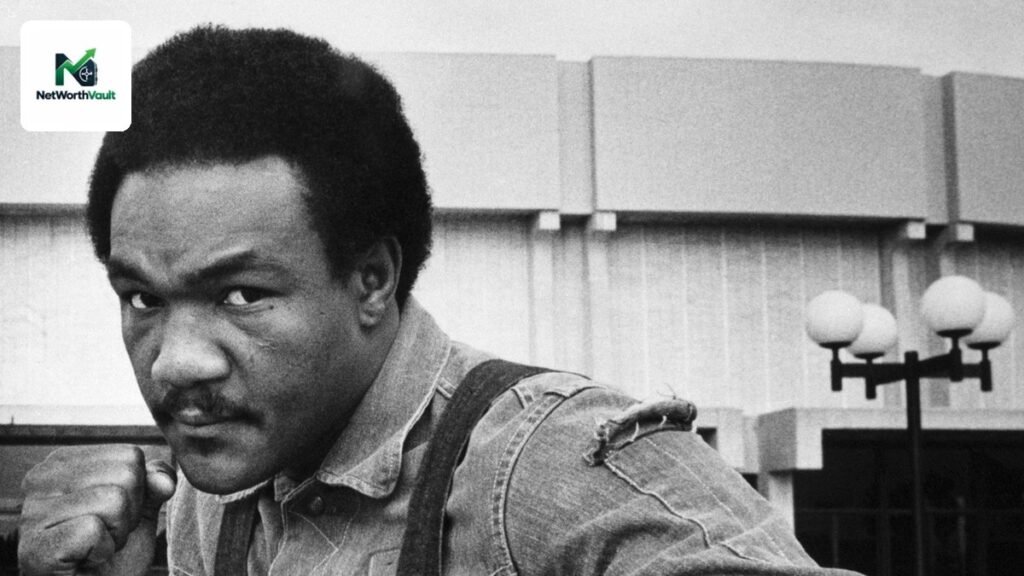
The comparison between Foreman’s two careers is stark, and it is the heart of the George Foreman Net Worth story. His boxing career — Olympic gold, two heavyweight championships, a 76–5 record with 68 knockouts, and fights against Ali, Frazier, Norton, Holyfield and Moorer — earned him, by most estimates, roughly $50 million to $60 million in purses across nearly thirty years, before tax, trainers’ cuts and managers’ fees. His first career, from 1969 to 1977, paid far less than his second: purses in the 1970s were modest by modern standards, and Foreman has said he set aside only about $5 million from those years, much of it lost to poor investments.
The grill, by contrast, earned him well over $200 million — the bulk of George Foreman Net Worth. The royalties alone, over five years, were worth more than his entire boxing career, and the $137.5 million buyout alone was worth more than twice his total career purses. Foreman made several times more money selling kitchen appliances than he made in the ring — and no one was punching him in the face for it.
That gap is what makes his story so unusual. Most sports stars earn the bulk of their money from their sport, and their endorsements are a bonus. For Foreman, the sport was the advertisement, and the endorsement was the business. His fame made the grill sell; the grill made him rich; and the wealth let him fund the church and youth centre that had motivated his comeback. The same pattern shows up in modern golf, where Dustin Johnson’s net worth was transformed by his move to LIV Golf — but no golfer’s side deal ever paid ten times his career prize money. The comparison is the clearest proof of how George Foreman Net Worth was built.
Other Business Ventures, Broadcasting and Books
The grill was the biggest business of Foreman’s life, but it was not the only one. After the comeback made him a television favourite, he worked as a boxing analyst, bringing the same warmth and plain speaking to the broadcast booth that he brought to the grill advertisements. He hosted a short-lived sitcom, George, on ABC in 1993 and 1994, playing a fictionalised version of himself as a retired boxer running a youth centre — a role close enough to his real life that it barely counted as acting.
He also wrote books. His memoir, God in My Corner, published in 2007, told the story of his two careers and his faith, and he published several cookbooks tied to the grill. None of these made him rich on their own, but they kept his name in front of the public and reinforced the image that sold the grill: the gentle giant who had found God, found family, and found a better way to cook a burger.
Foreman also lent his name to grilling accessories and cookware, and he made personal appearances and gave motivational speeches for much of his later life. He was, in effect, a one-man brand: the name “George Foreman” meant warmth, honesty and good food, and that brand kept earning long after he left the ring. The grill’s maker continued to sell new versions, and the income kept flowing to his estate after his death.
Real Estate and Other Assets
Real estate was a modest part of George Foreman Net Worth, and it is the least documented part of his financial story. He lived for many years in Huffman, Texas, in the Houston area, in a large home on wooded land that served as the family base for his wife and children. He also owned property in Houston itself, close to the church he founded and the youth centre he ran. No reliable purchase prices or current valuations have been published for these homes, so we do not put a number on them here.
Property was never the engine of George Foreman Net Worth. Unlike actors who build wealth by buying and selling Los Angeles mansions, Foreman’s money came from a single business deal, and it stayed in the form of cash, stock and royalty income. The $10 million in Salton stock from the 1999 buyout was a significant asset in its own right, and the grill’s continued sales meant income kept flowing to him — and now to his estate — for decades after the buyout.
There are no public filings that break down the holdings behind George Foreman Net Worth, and no estate inventory has been published since his death. What the record does show is a man who lived comfortably but not extravagantly, who put his money into his church, his youth centre and his family, and who died with his finances in far better shape than most athletes who earned far less.
Personal Life: Faith, Family, and Twelve Children
George Foreman’s personal life was as outsized as his career. He was married five times, and his wife at his death was Mary Joan Martelly, whom he married in 1985. He had twelve children, and he gave all five of his sons the same name: George — George Jr., George III (“Monk”), George IV (“Big Wheel”), George V (“Red”) and George VI (“Little Joey”). He wanted his sons to always know who they were, and to carry his name with pride. His daughter Freeda boxed professionally before leaving the sport; she died in 2019, at 42, a loss Foreman spoke about with great sadness.
Faith was the centre of his life after 1977. He was ordained as a minister, founded the Church of the Lord Jesus Christ in Houston, and preached there for the rest of his life. He also founded the George Foreman Youth and Community Center, which gave children from his old neighbourhood a gym, a safe place to study, and a reason to stay off the streets. He funded the centre himself, and keeping it open was the reason he came back to boxing in 1987.
Foreman was also known for his warmth and humour in later life. The fearsome puncher of the 1970s became, in his fifties and sixties, a grandfatherly figure who smiled on television and told self-deprecating jokes about his weight. He appeared in a 2023 biographical film about his life, Big George Foreman, and remained a public figure until his death. On March 21, 2025, his family announced that he had died in a Houston hospital at 76. No cause of death was publicly disclosed. He was buried privately in April 2025, and a public memorial service was held in Houston.
Final Thoughts
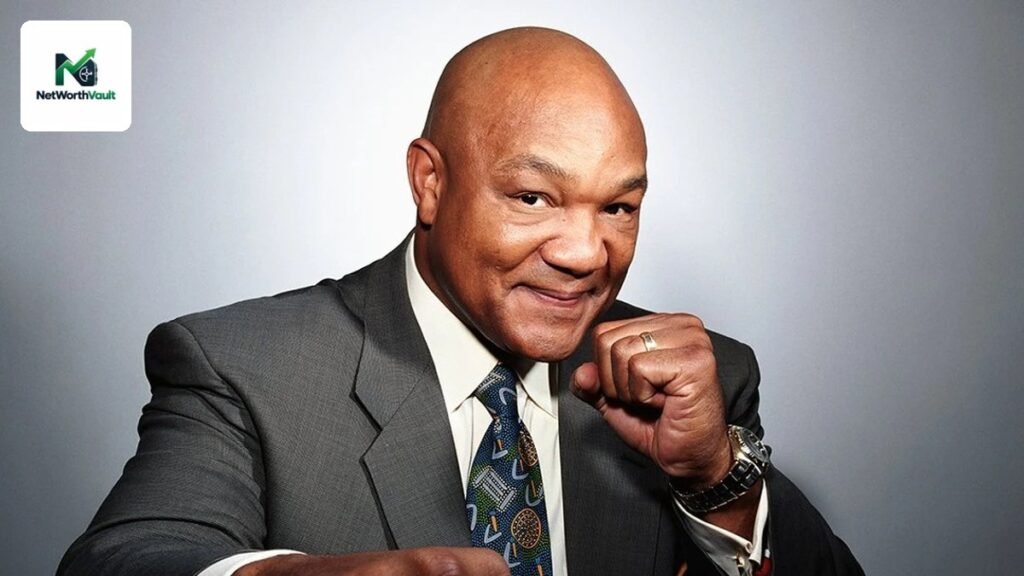
George Foreman Net Worth of $300 million is not really a boxing story. It is a business story, and a lesson in the value of a good deal. Boxing gave him fame, a gold medal, two world titles, and the record as the oldest heavyweight champion in history. But it was the grill — a small electric cooker, a profit-share deal instead of a flat fee, and a $137.5 million buyout — that made him rich. He took the money, funded his church and his youth centre, raised twelve children, and died a beloved figure. Few athletes have ever turned fame into fortune so completely, and fewer still did it with a kitchen appliance.
For more photos, fan art, and memorabilia from Foreman’s career, check out George Foreman Net Worth on Pinterest.
Frequently Asked Questions
What was George Foreman’s net worth when he died?
George Foreman Net Worth was estimated at $300 million when he died on March 21, 2025, at the age of 76, according to Celebrity Net Worth. The figure describes the estate he left behind. No public estate inventory has been published, so it remains a third-party estimate, but it is consistent across every major tracker in 2025 and 2026.
How much money did George Foreman make from the grill?
The George Foreman Net Worth total includes well over $200 million from the George Foreman Grill, by every published account: more than $200 million through 2011 according to Wikipedia, about $240 million according to Yahoo Finance, and more than $250 million according to Celebrity Net Worth. The largest single payment was the $137.5 million buyout in 1999, when Salton bought the perpetual rights to his name.
How much did George Foreman earn from boxing?
George Foreman Net Worth counts career boxing purses estimated at roughly $50 million to $60 million in total, across both halves of his career, 1969 to 1997. That is gross pay before tax and expenses. He has said he set aside only about $5 million from his first career (1969–1977), much of which was lost to poor investments, which is why he came back to boxing in 1987.
What was George Foreman’s boxing record?
George Foreman Net Worth is built on a professional boxing record of 76 wins and 5 losses, with 68 wins by knockout. He won Olympic heavyweight gold in 1968, first won the world heavyweight title in 1973 by knocking out Joe Frazier, and regained the title in 1994 by knocking out Michael Moorer at the age of 45, becoming the oldest heavyweight champion in history.
How many children did George Foreman have?
The man behind George Foreman Net Worth had twelve children. He named all five of his sons George: George Jr., George III (“Monk”), George IV (“Big Wheel”), George V (“Red”) and George VI (“Little Joey”). His wife at his death was Mary Joan Martelly, whom he married in 1985. His daughter Freeda, who boxed professionally, died in 2019 at the age of 42.
You May Also Like: Sean Parker Net Worth