
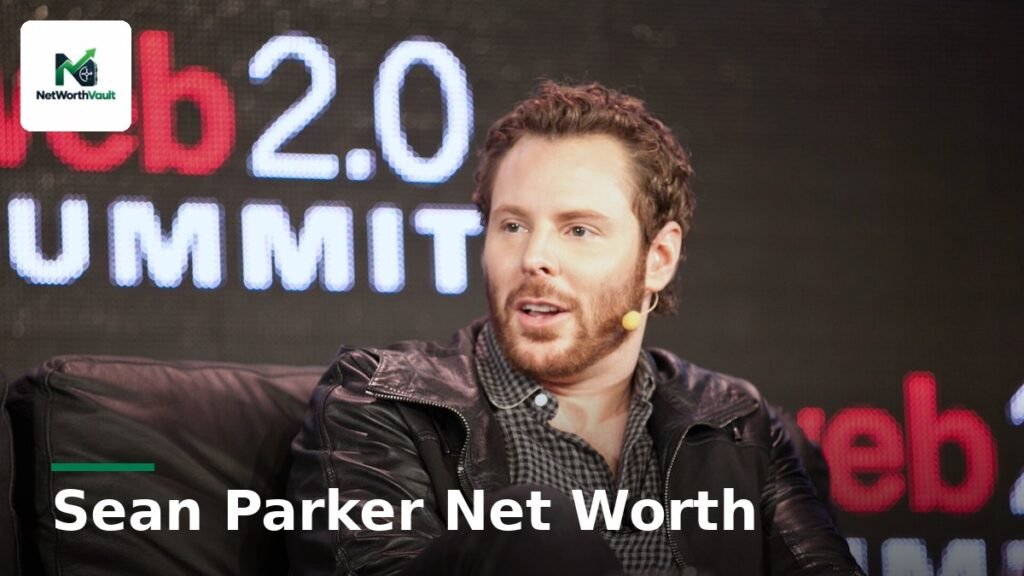
Sean Parker Net Worth is a question that reaches back to the very beginning of the modern internet. How does a teenager who never went to college, who co-founded a company that was sued out of existence, end up worth billions? The answer, according to Forbes, is an estimated net worth of $3.4 billion.
Forbes published that figure on October 18, 2026, in its real-time billionaires tracker, ranking Parker No. 1,253 in the world. Most of it comes from his early stake in Facebook, where he was the first president, and from his 2010 investment in Spotify. Before either of those, he co-founded Napster in 1999 — and this is the story of how a self-taught hacker from Virginia became a billionaire.
In This Article
- Who Is Sean Parker?
- Sean Parker Net Worth in 2026: The $3.4 Billion Estimate Explained
- How We Calculate Net Worth
- Early Life in Virginia: A Self-Taught Hacker
- Napster: The File-Sharing Revolution
- Plaxo and the Lessons of Being Ousted
- Facebook: The First President
- Spotify: The $15 Million Bet That Paid Off
- How Does Sean Parker Make Money?
- Venture Capital and Later Ventures
- Philanthropy: The Parker Foundation and Cancer Immunotherapy
- Stability AI and What He Is Doing Now
- Personal Life: Marriage to Alexandra Lenas
- Net Worth Growth Over the Years
- Final Thoughts
Quick Facts
| Detail | Information |
|---|---|
| Full Name | Sean Parker |
| Date of Birth | December 3, 1979 |
| Age | 46 as of November 2026 |
| Birthplace | Herndon, Virginia, USA |
| Nationality | American |
| Occupation | Entrepreneur, investor, philanthropist |
| Education | No college; calls Napster his education |
| Years Active | 1999–present |
| Companies | Napster (co-founder, 1999); Plaxo (co-founder, 2002); Facebook (first president, 2004–2005) |
| Best Known For | Co-founding Napster; first president of Facebook; early investor in Spotify |
| Estimated Net Worth | $3.4 billion (Forbes real-time, October 18, 2026) |
| Main Income Sources | Early Facebook (Meta) stake; Spotify investment; venture capital |
| Spouse | Alexandra Lenas (married 2013) |
| Children | 2 |
| Forbes World Rank | No. 1,253 (October 2026) |
Who Is Sean Parker?
Sean Parker is an American entrepreneur and philanthropist, most notable for co-founding the file-sharing service Napster and serving as the first president of Facebook. He also co-founded Plaxo, Causes, Airtime, and Brigade, and he is the founder and chairman of the Parker Foundation, which focuses on life sciences, global public health, and civic engagement.
Parker’s career has been defined by both brilliance and controversy. He is a self-taught programmer who was investigated by the FBI at age 16 for hacking, and he never attended college, calling his time at Napster his education. He has been called one of the most consequential figures in the history of the internet — and also one of its most restless, moving from music to social networking to philanthropy to artificial intelligence.
He is also a familiar face in popular culture. Justin Timberlake played him in the 2010 film The Social Network, which told the story of Facebook’s founding. The portrayal made Parker famous to people who had never heard of Napster, and it fixed his image in the public mind: the fast-talking, charismatic operator who saw the future before anyone else did.
Sean Parker Net Worth in 2026: The $3.4 Billion Estimate Explained
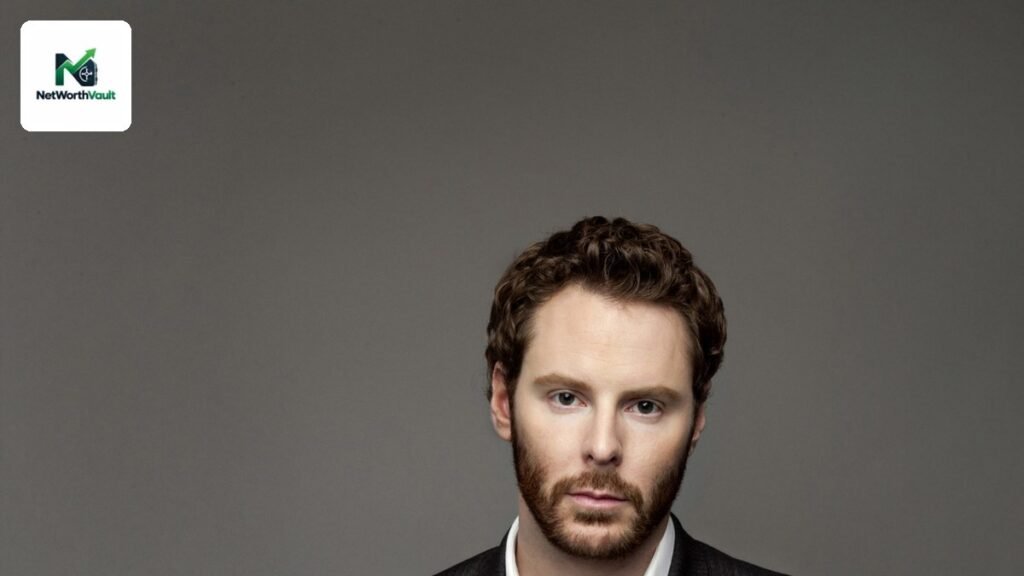
As of 2026, Sean Parker’s net worth is estimated at $3.4 billion, according to Forbes, which published the figure on October 18, 2026, in its real-time billionaires tracker, ranking him No. 1,253 in the world. Forbes’ annual World’s Billionaires list put him at the same $3.4 billion in March 2026, and Celebrity Net Worth gives $3.5 billion. That is the figure we use as our headline estimate, because Forbes is the most authoritative source for his wealth.
Other estimates cluster closely around the same number. Forbes valued him at $3.0 billion in May 2025, and its real-time tracker showed $3.35 billion in late November 2026, ranking him around No. 1,210 in the world. The honest way to describe it is this: most credible estimates place Sean Parker’s net worth between $3.3 billion and $3.5 billion in late 2026, with $3.4 billion — the Forbes figure — as the most widely cited point in that range.
Why do the numbers move at all? Parker’s fortune is built on shares in public companies, mainly Meta (Facebook’s parent company) and Spotify. Those share prices move every trading day, so his net worth moves with them. It is an outside estimate that changes with the market, not a figure Parker or any company has disclosed.
The most important thing to understand is that his stake sizes are not in a current filing. Forbes estimates what he still holds based on his early investments and on how much he is likely to have sold over the years. That is why different trackers disagree by a hundred million dollars or so — they are making different assumptions about the same undisclosed holdings.
How We Calculate Net Worth
At Net Worth Vault, we calculate net worth by adding up the income we can verify from public sources, estimating the value of known businesses and assets, and then subtracting typical taxes, fees, and living costs. For Sean Parker, that calculation is built on two early bets that became enormous.
The first is Facebook. Parker joined the five-month-old company as its first president in 2004, and he received a significant equity stake. Facebook went public in 2012 at a valuation of about $104 billion, and its parent company, Meta, is now worth far more. Even a small percentage of that company is worth billions, and Parker’s stake — accumulated before the company was famous — is the foundation of his fortune.
The second is Spotify. In 2010, Parker invested $15 million in the Swedish streaming service, joined its board, and helped negotiate its launch in the United States in July 2011. Spotify went public in 2018, and its share price has risen sharply since then. His early investment, made when streaming music was still a new idea, is now worth many times what he paid.
We also count his venture capital work, his later companies, and his philanthropy, which has moved hundreds of millions of dollars out of his fortune and into medical research. What we do not do is invent numbers. His exact share counts in Meta and Spotify are not public, so we report Forbes’ estimate and explain how it was built, rather than pretending to know more than the sources do.
Early Life in Virginia: A Self-Taught Hacker
Sean Parker was born on December 3, 1979, in Herndon, Virginia, to Diane Parker, a television advertising broker, and Bruce Parker, a United States government oceanographer and chief scientist at NOAA. His childhood was marked by serious health challenges. He suffered from severe nut allergies and asthma, which led to frequent hospital visits and caused him to miss large portions of high school.
He taught himself to program as a child, and by his teens he was a skilled hacker. At 16, he was investigated by the FBI for hacking into the networks of large corporations. He was not charged, but the experience left a mark: he learned how computer systems worked from the inside, and he learned how much trouble curiosity could cause.
He attended Oakton High School in Fairfax County, Virginia, for two years before transferring to Chantilly High School in 1996 for his junior and senior years. He never went to college. Instead, he spent his time online, talking to other young programmers about music, physics, and hacking — and at 15, he met a 14-year-old named Shawn Fanning, who would change his life.
Napster: The File-Sharing Revolution
When Parker was 15, he met Shawn Fanning over the internet, where the pair bonded over programming, theoretical physics, and hacking. A few years later, Parker raised the initial $50,000, and he and Fanning, then a student at Northeastern University, launched Napster in June 1999 — a free peer-to-peer file-sharing service that let users share MP3 music files with each other. The name came from Fanning’s online nickname, and the service took it from there.
Napster grew faster than almost any business in history. Within months, tens of millions of people were using it to download music for free, and at its peak it had around 80 million registered users. It was credited with revolutionizing the music industry, and it is considered by some to be a precursor to iTunes and modern music streaming services.
But the success came with a fatal problem: the music was copyrighted, and the record labels sued. The Recording Industry Association of America and artists including Metallica and Dr. Dre took Napster to court, and in 2001, a judge ordered it shut down. Parker has called his time at Napster his college education, and the lesson he took from it was clear: a great product is not enough if the business model breaks the law. It was a lesson he would apply to his next big bet — a legal version of the same idea.
Plaxo and the Lessons of Being Ousted
After Napster’s collapse, Parker co-founded Plaxo in November 2002, an online address book and social networking service that integrated with Microsoft Outlook. Plaxo was one of the first products to build virality into its launch: it asked users to invite their contacts, and those contacts invited theirs. The strategy worked, and Plaxo grew to 20 million users.
Plaxo was an early social networking tool, and its ideas later influenced the growth of companies including LinkedIn, Zynga, and Facebook. But Parker did not get to enjoy its success. Two years after founding Plaxo, he was ousted by the company’s venture capital investors, Sequoia Capital and Ram Shriram, in an acrimonious exit that reportedly involved the investors hiring private investigators to follow him.
The experience shaped the rest of his career. He became obsessed with founder-friendly corporate structures — with making sure that the people who start a company keep control of it. When he joined Facebook a year later, the first thing he did was negotiate a board structure that gave Mark Zuckerberg control. He had learned, the hard way, what happens when founders lose it.
Facebook: The First President
In 2004, Parker saw a website called thefacebook.com, a social network for Harvard students that had just expanded to other colleges. Intrigued, he reached out to its founders. He had experience in the social networking industry: he had been an early advisor to Friendster and its founder, Jonathan Abrams, for which he had been given a small amount of stock in 2003.
Parker met with Mark Zuckerberg and Eduardo Saverin, and a few months later he joined the five-month-old company as its president — the first person to hold the title. He helped the young company move to Palo Alto, set up its first real office, and raise its first outside money. As president, he brought on Peter Thiel as Facebook’s first outside investor, and he negotiated for Zuckerberg to retain three of Facebook’s five board seats, which gave Zuckerberg control of the company and allowed Facebook to remain a private company on its own terms. According to Thiel, Parker was the first person to see the company’s full potential.
His time at Facebook was short but decisive. He helped turn a college project into a real company, with real investors and a structure that protected its founder. Then, in 2005, he resigned after being arrested on suspicion of cocaine possession in North Carolina. No charges were filed, but the arrest forced his departure. He left with his equity intact — and that equity is the foundation of his $3.4 billion fortune.
Spotify: The $15 Million Bet That Paid Off
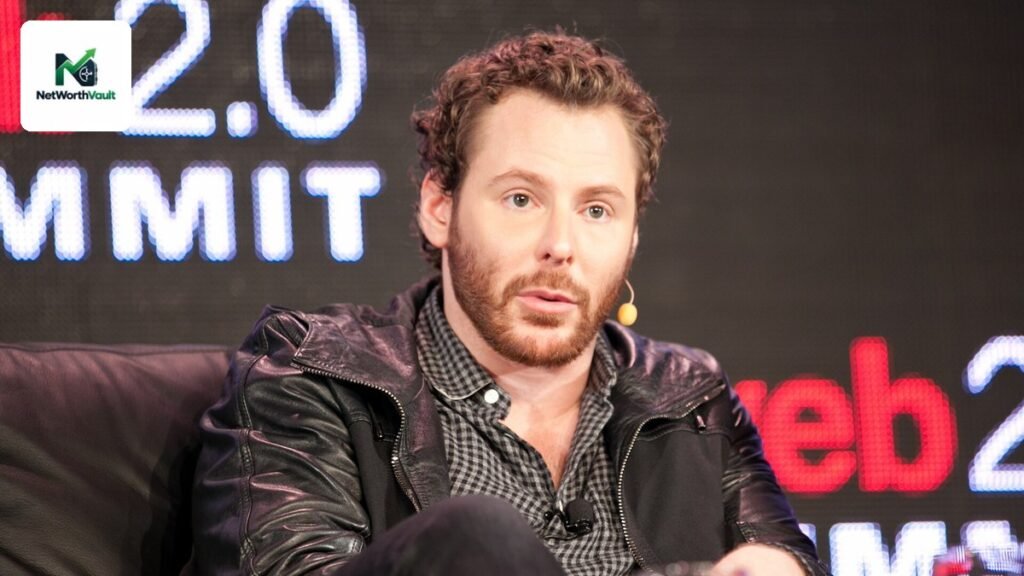
While working at Founders Fund, Parker had been looking for a company that could carry forward Napster’s mission of sharing music — legally, this time. In 2009, a friend showed him Spotify, a Swedish streaming service, and Parker sent an email to its founder, Daniel Ek. The pair traded emails, and in 2010, Parker invested $15 million in Spotify.
The investment was a bet that the future of music was streaming, not downloads and not piracy. Parker joined Spotify’s board, negotiated with Warner Music and Universal on Spotify’s behalf, and in July 2011, Spotify announced its launch in the United States. At Facebook’s f8 conference that year, Parker announced a partnership between Facebook and Spotify that put the streaming service in front of hundreds of millions of Facebook users.
Spotify went public in 2018, and its share price has climbed sharply in the years since, making Parker’s early $15 million investment worth many times what he paid. It was Napster’s idea, done legally — and this time, the record labels were partners instead of plaintiffs. The connection between music and money runs through many of the fortunes we cover, and Taylor Swift’s net worth shows the other side of the same story: an artist whose catalog became vastly more valuable as streaming took over the industry Parker helped to build.
How Does Sean Parker Make Money?
Sean Parker makes money from investments he made years ago, and the money arrives in two forms. The first is the growth of his early stakes. His Facebook equity, acquired when the company was five months old, has grown with Meta’s share price for two decades. His Spotify investment, made in 2010, has grown with the streaming industry. He does not need to work for a salary — his wealth compounds while he does other things.
The second is his venture capital work. Parker was a managing partner at Founders Fund, the venture firm co-founded by Peter Thiel, from 2006 to 2014, where he invested in early-stage technology companies. He has also invested personally in startups, and he has founded companies of his own, including Causes, Airtime, and Brigade, though none of them matched the scale of Napster or Facebook.
He does not draw a large public salary, and he does not have endorsement deals or a media career. His fortune is the result of being early — early to file-sharing, early to social networking, and early to streaming music — and of holding on to his stakes while those industries grew up around him. It is a very different path from the creator-led fortunes of the social media age, and Logan Paul’s net worth shows that other route — an audience built first, and a business empire built on top of it.
Venture Capital and Later Ventures
After leaving Facebook, Parker became a managing partner at Founders Fund, where he worked from 2006 to 2014. The firm, founded by Peter Thiel, was one of the most successful venture capital firms of its era, backing companies including SpaceX, Airbnb, and Palantir. Parker’s time there put him at the center of Silicon Valley investing, and it gave him a front-row seat to the next generation of technology companies.
He also kept founding companies. In 2007, he co-founded Causes, a social networking platform for charitable giving built on Facebook. In 2011, he co-founded Airtime, a video chat service, with Shawn Fanning, his Napster co-founder. In 2014, he co-founded Brigade, an online platform for civic engagement designed to help citizens connect with each other and with their representatives.
None of these ventures became the next Facebook. Causes and Airtime faded, and Brigade was eventually sold. But they show Parker’s pattern: he keeps building, keeps experimenting, and keeps looking for the next big shift. The failures cost him little next to the successes, because the successes were so large.
Philanthropy: The Parker Foundation and Cancer Immunotherapy
In recent years, Parker has focused on philanthropy. In 2015, he established the Parker Foundation with a $600 million commitment, and in 2016, he created the Parker Institute for Cancer Immunotherapy with a $250 million grant — one of the largest single gifts ever made to cancer research.
The institute funds research into immunotherapy, a treatment that trains the body’s own immune system to fight cancer, and it brings together researchers from leading institutions including Stanford, the University of California, the University of Pennsylvania, MD Anderson, and Memorial Sloan Kettering. Rather than funding one lab, the institute’s model is to connect researchers across institutions so they can share data and results — the same network thinking Parker applied to file-sharing and social networking, now aimed at a disease.
The foundation also works on global public health and civic engagement, the two other areas Parker cares about most. His giving is unusual among technology billionaires for its focus: rather than spreading money across many causes, he has concentrated on one big scientific bet, and he has funded it at a scale that few individuals ever attempt.
Stability AI and What He Is Doing Now
In June 2024, Parker became the executive chairman of Stability AI, the generative-AI company behind the Stable Diffusion image-generation model. The appointment put him at the center of the most important technology shift since the social network — and it fits his pattern of arriving early to a new industry.
Stability AI had been through a turbulent period, with its founder departing and its finances under pressure, and Parker’s role was to stabilize the company and set its direction. Stable Diffusion, released in 2022, was one of the first widely used open image-generation models, and it made AI-generated art accessible to millions of people. Parker has described artificial intelligence as the next great platform shift, comparable to the internet itself, and his involvement signals that he sees the same kind of opportunity he saw in Napster and Facebook.
As of 2026, he continues to serve as executive chairman of Stability AI while running the Parker Foundation and managing his investments. He has also stepped back from some of his older roles, including his long tenure on Spotify’s board, as he focuses on AI and philanthropy. At 46, he is still building — and still betting on the future arriving sooner than most people expect.
Personal Life: Marriage to Alexandra Lenas
Sean Parker married Alexandra Lenas, a singer-songwriter, in 2013. Their wedding, held in a redwood forest in Big Sur, California, was widely reported for its elaborate, Tolkien-inspired setting, with costumes, live animals, and a set built to look like a scene from The Lord of the Rings.
The couple has two children, and they keep their family life largely private. Parker has said that his own childhood health problems — the allergies and asthma that kept him in and out of hospital — shaped his interest in medical research, and his philanthropy through the Parker Foundation reflects that personal connection. He lives in California, where he remains active in technology investing and in the foundation’s work.
Net Worth Growth Over the Years
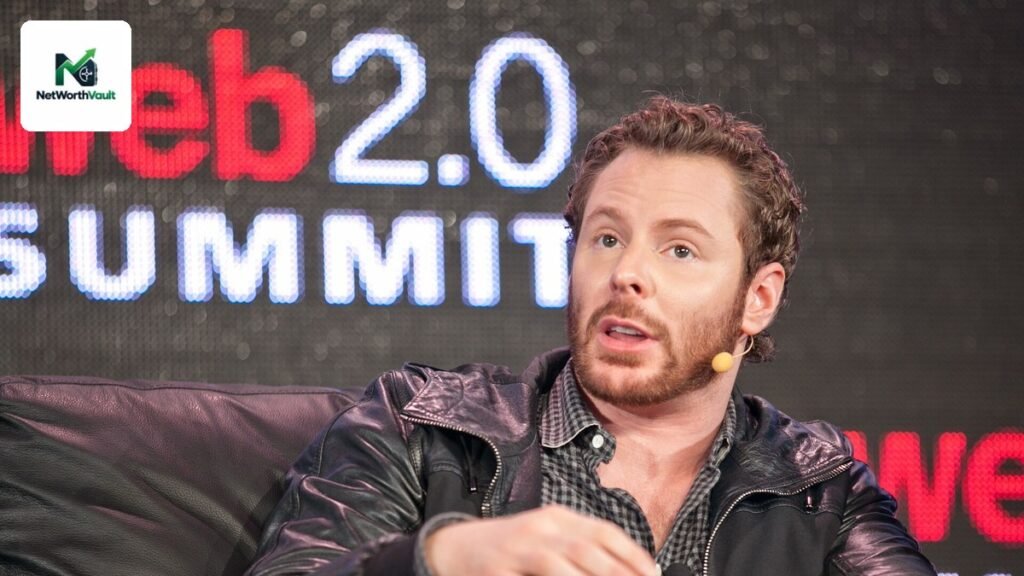
Sean Parker’s fortune has grown steadily rather than in sudden jumps. Using Forbes’ annual World’s Billionaires lists, the estimate moved from $2.6 billion in March 2017 to $3.4 billion in March 2026. In May 2025, Forbes put him at $3.0 billion, and by October 2026, the real-time tracker showed $3.4 billion.
That steadiness is worth noting. Unlike founders whose wealth depends on a single private company, Parker’s fortune is tied to public shares in Meta and Spotify, which have grown over a decade. He has not had a single payday since Facebook’s IPO in 2012 — instead, his early stakes have compounded as the companies themselves grew. It is the same principle that Morgan Housel’s net worth profile describes from the investor’s side: wealth grows when you hold a good asset for a long time and let it work.
Final Thoughts
Sean Parker’s net worth of $3.4 billion is the fortune of a man who saw the future three times: music sharing, social networking, and streaming. Each time, he arrived before the industry did and held on long enough for the bet to pay off.
The figure is an estimate that moves with Meta and Spotify share prices, and his exact holdings are not public. But the story is well documented — a self-taught teenager, a shut-down startup, an ousted founder, and a first president who kept his own stake. For a similar story, Steve Huffman’s net worth shows how another social media pioneer turned a college project into a fortune.
Frequently Asked Questions
What is Sean Parker’s net worth in 2026?
Sean Parker’s net worth is estimated at $3.4 billion in 2026, according to Forbes, which published the figure on October 18, 2026, in its real-time billionaires tracker, ranking him No. 1,253 in the world. Most of it comes from his early Facebook stake and his 2010 investment in Spotify.
How did Sean Parker make his money?
Parker made his money by being early to three industries. He co-founded Napster in 1999, became Facebook’s first president in 2004 and received an early equity stake, and invested $15 million in Spotify in 2010. The Facebook and Spotify holdings grew for years and now account for nearly all of his fortune.
What is Sean Parker’s role at Stability AI?
Parker became the executive chairman of Stability AI, the generative-AI company behind Stable Diffusion, in June 2024. He joined during a turbulent period for the company, and his role is to stabilize it and set its direction as artificial intelligence becomes the next major technology platform.
Is Sean Parker still involved with Facebook?
No. Parker resigned as Facebook’s first president in 2005 after an arrest on suspicion of cocaine possession, for which no charges were filed. He left with his equity stake intact, and that stake is the foundation of his fortune. He has had no operational role at the company, now Meta, since then.
Who is Sean Parker’s wife?
Sean Parker married Alexandra Lenas, a singer-songwriter, in 2013. Their wedding in a redwood forest in Big Sur, California, was widely reported for its elaborate, Tolkien-inspired setting. The couple has two children, and they keep their family life largely private, rarely appearing together at public events.
You May Also Like: Palmer Luckey Net Worth