
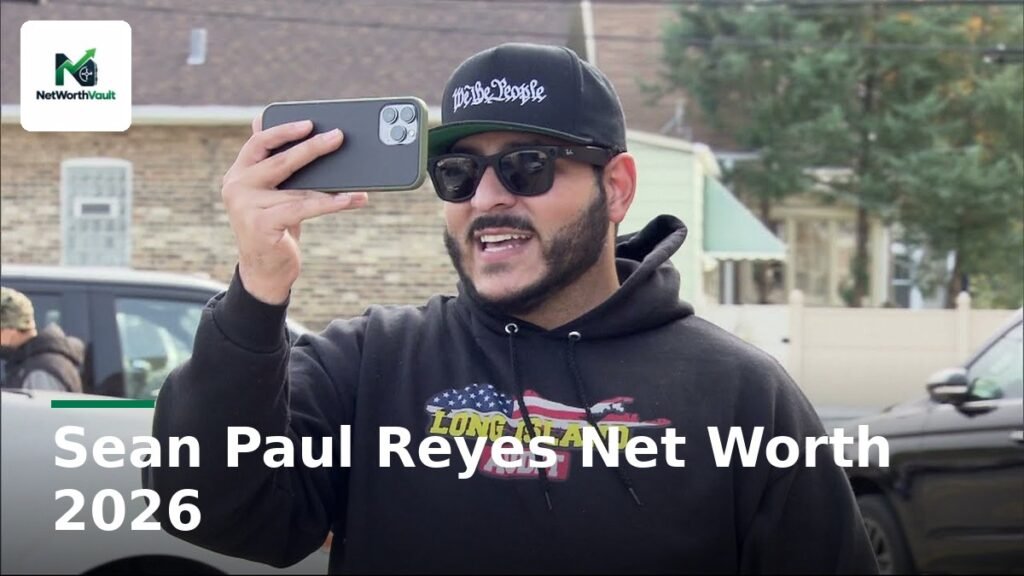
Sean Paul Reyes is not a movie star. He is not a singer, an athlete, or a tech founder. He does not have a record deal, a film franchise, or a company that has been valued in the billions.
He has a camera, a YouTube channel, and a willingness to walk into government buildings and police stations, press record, and ask officials a simple question: do you respect my right to film here?
That is enough to have made him one of the most famous — and most controversial — creators in the First Amendment auditing movement, the founder of the channel Long Island Audit, and, according to many websites, a multimillionaire.
But is he really worth $8 million? That is the number you will see repeated across the internet, and it is the number this article will examine honestly, because the truth is more complicated than a single headline figure.
Sean Paul Reyes’ net worth is widely reported online at around $8 million in 2026, but that figure has never been confirmed by Reyes himself, and no public balance sheet, tax return, or audited financial statement supports it. Other published estimates are far lower, at $1.5 million to $2.2 million, and some careful reviews conclude that no reliable personal net worth total can be verified at all.
That does not mean Reyes is not wealthy. It means his wealth, if it exists at that level, is private, and the $8 million figure is an estimate built on YouTube views, audience support, and guesswork — not on a document anyone has seen.
This article will tell you who Sean Paul Reyes actually is, how Long Island Audit started, how he earns money, what his legal cases have really cost and brought him, and why his net worth is one of the hardest celebrity figures on the internet to verify. Where a fact is confirmed, it will be sourced. Where it is not, this article will say so plainly.
In This Article
- Who Is Sean Paul Reyes?
- Sean Paul Reyes Net Worth in 2026: What We Actually Know
- How the $8 Million Estimate Spread Online
- Long Island Audit: How the Channel Started
- How Sean Paul Reyes Makes Money on YouTube
- Patreon, Donations and Life After Demonetization
- Long Island Audit, Inc.: The Business Behind the Channel
- Reyes v. City of New York: The Case That Defined Him
- Other Arrests, Charges and Court Cases
- The Groton Case and the 2026 Conviction
- Sean Paul Reyes’ Early Life and Life Before YouTube
- What Is First Amendment Auditing?
- Criticism, Controversy and Supporters
- Sean Paul Reyes’ Personal Life: What Is (and Isn’t) Public
- Frequently Asked Questions About Sean Paul Reyes Net Worth
- Final Thoughts
Quick Facts
| Detail | Information |
|---|---|
| Full Name | Sean Paul Reyes (also styled SeanPaul Reyes) |
| Known As | Long Island Audit / Long Island Auditor |
| Estimated Net Worth (2026) | Around $8 million is widely reported online, but NOT confirmed; other published estimates put it at $1.5 million–$2.2 million; no verified personal total exists |
| Net Worth Status | Unconfirmed estimate; no public balance sheet, tax return or audited statement |
| Main Income Sources | YouTube ad revenue (modelled estimates only), Patreon and audience support, donations, merchandise and live-stream support; no confirmed salary or settlement income |
| Primary Platform | YouTube – Long Island Audit (@longislandaudit) |
| YouTube Subscribers | About 1.04 million (September 2026, Wikipedia); about 1.05 million (November 2026, vidIQ) |
| YouTube Videos | More than 2,000 videos (September 2026); 2,283 videos (12 November 2026, vidIQ) |
| YouTube Total Views | About 684 million (November 2026, vidIQ) |
| Channel Launched | March 2021; first uploads 7 March 2021 |
| Content Focus | First Amendment audits, police accountability, recording public officials |
| Business | Founder, Long Island Audit, Inc., incorporated 25 August 2021 in New York |
| Previous Job | Logistics director for a cosmetics manufacturing company on Long Island |
| Age / Date of Birth | Not publicly verified – do not rely on ages quoted by net worth sites |
| Residence | Suffolk County, New York, USA (per his federal court complaint) |
| Family / Relationships | Not publicly verified |
| Legal Status | Multiple arrests (about 11 in five years, by his own account in 2026); found guilty of third-degree criminal trespass in Connecticut on 3 September 2026 |
| Nationality | American |
| Profession | YouTuber, independent journalist, constitutional activist |
| Website | longislandaudit.com |
Who Is Sean Paul Reyes?
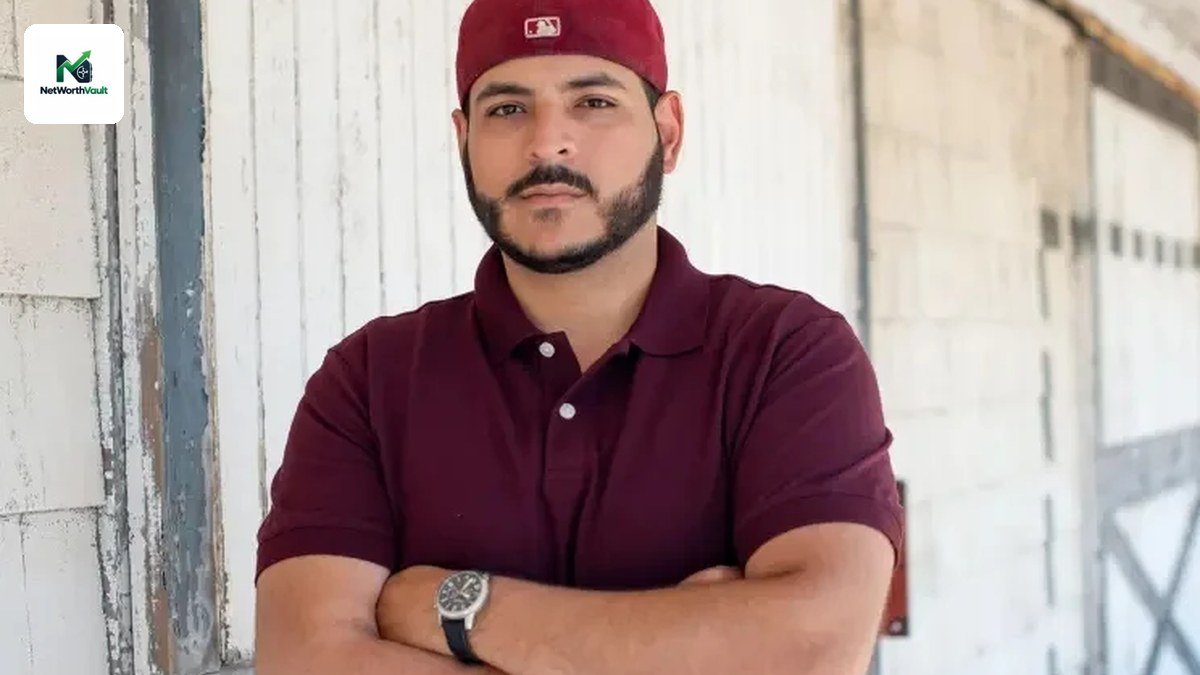
Sean Paul Reyes — often written as SeanPaul Reyes — is an American YouTuber and independent journalist best known as the creator of Long Island Audit.
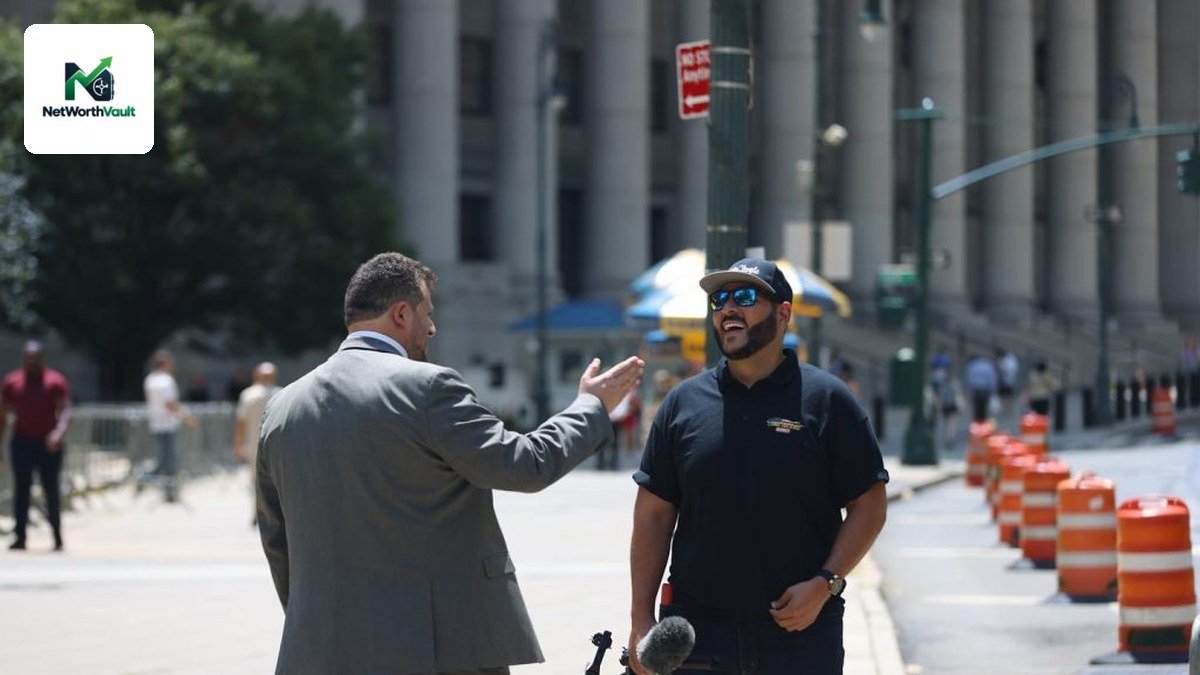
His channel publishes videos of his encounters with police officers, government employees, and public officials. In a typical video, Reyes walks into a public building — a police precinct lobby, a city hall, a post office, a courthouse, or a federal facility — with a camera, and films. When an official tells him to stop, to leave, or to show identification, he refuses, calmly cites the First Amendment and the public’s right to record government activity, and keeps filming.
That practice is known as First Amendment auditing, and Reyes is one of its most prominent practitioners. He describes himself as an independent journalist, and he has been described that way in court filings and in news coverage. His stated philosophy, repeated in interviews, is simple: “If you don’t exercise your rights, then you don’t have them.”
He is not the Jamaican musician Sean Paul, whose full name is Sean Paul Henriques. That confusion is common online, and some low-quality net worth pages have mixed the two men together. They are different people, with different careers, different income, and different net worths. This article is about Sean Paul Reyes, the Long Island Audit creator, and no figure in it comes from the musician’s career.
Reyes launched Long Island Audit in March 2021. By September 2026, according to Wikipedia’s summary of public YouTube data, the channel had about 1.04 million subscribers and more than 2,000 videos. By 12 November 2026, vidIQ recorded 1.05 million subscribers, 2,283 videos, and 684,636,057 total views. Reyes himself says his broader audience across social media platforms is more than two million, although that figure is self-reported and has not been independently audited.
That growth, in just five years, is remarkable for a channel that films in government lobbies and argues about constitutional law. It is also the reason his income and his net worth are now a subject of public debate. A channel with a million subscribers and hundreds of millions of views can earn serious money from advertising, memberships, and donations — but how much, exactly, depends on details that are not public, and that have changed dramatically in 2026, when YouTube demonetization hit the auditing genre.
Reyes is also a litigant. He has filed multiple federal civil rights lawsuits against cities, police departments, and individual officers, and he has been arrested about 11 times in five years, by his own account given in a Groton Police internal affairs interview in April 2026. Some of those arrests led to charges being dismissed. Some led to convictions. One led to a case that reached the New York Court of Appeals in June 2026 and produced a ruling that will shape recording rights in New York for years.
To understand his net worth, you have to understand all three parts of that story: the creator, the businessman, and the litigant. They are not separate. His videos create his audience. His audience creates his income. His arrests create his videos, and his lawsuits create his reputation — and his legal bills.
Sean Paul Reyes Net Worth in 2026: What We Actually Know
Here is the honest summary, before the detail.
There is no verified figure for Sean Paul Reyes’ net worth.
No major financial publication tracks him. He does not own a public company. He has not disclosed his income, his bank balance, his property, or his debts. He has not published a tax return or a financial statement. No court filing in his many cases lists his personal wealth.
What exists instead is a set of third-party estimates, and they disagree with each other by millions of dollars.
The most commonly repeated figure is around $8 million. WorthAnchor, in a profile updated in 2026, says several online sources estimate his wealth at around $8 million, while other estimates are lower, and stresses that Reyes has not publicly confirmed these figures. Patty360, in July 2026, puts it at $8 million to $10 million, while noting that the sourcing behind that figure is limited. WorthTrackers, in August 2026, lists $8.5 million in one place and around $8 million in another, and claims a yearly income of $450,000 without showing how that was calculated. CelebInfoT and another NetWorthExplore profile also cite around $8 million for 2026.
A different NetWorthExplore profile, published in January 2026 and updated in May 2026, gives a much lower range: $1.5 million to $2.2 million, and says that figure reflects years of content creation, legal victories, and audience support.
A careful review by USRPTV, updated on 25 October 2026, takes a third position: it says no independently verified personal net worth total was found in the sources reviewed, that no complete public personal balance sheet was available, and that a reliable personal dollar total is not verified. It does not offer its own number.
So which figure should this article use? The responsible answer is to report the $8 million figure as the widely cited estimate, to report the $1.5 million to $2.2 million figure as a competing published estimate, and to make clear that neither is confirmed — and that the true figure could be lower than both, or higher than both, because the underlying records are private.
That is not a satisfying answer if you wanted a single clean number. It is the only honest answer the public record allows, and it is the answer this article will use throughout. Where a section discusses what $8 million would mean, it will say so as a hypothetical based on that widely reported estimate, not as a fact.
It is also worth saying what the $8 million figure is not. It is not a salary. It is not an amount Reyes has in the bank. It is not the value of Long Island Audit, Inc. as a business. And it is not a settlement total. As a detailed legal review by LegalClarity found in mid-2026, Reyes has not publicly received any confirmed settlement payments from his various lawsuits as of mid-2026, despite filing multiple federal civil rights cases. Some cases ended without any publicly reported financial terms, and no documented settlement amount has been published for any of them.
How the $8 Million Estimate Spread Online
If no one has seen Reyes’ bank balance, how did $8 million become the standard answer? One site publishes a figure, often without explaining how it was calculated. Other sites copy it, sometimes rounding it up or down. Within months, the figure appears everywhere, and repetition starts to look like confirmation. The sites that cite $8 million do not publish a balance sheet, a tax document, or a business valuation. They cite each other, or “public creator income signals” — a phrase that sounds specific but identifies no verifiable document. That does not necessarily mean the figure is wrong: a YouTuber with a million subscribers and 680 million views could plausibly have earned several million dollars over five years. But plausibility is not proof, and three reasons argue for scepticism. YouTube income is not net worth — earnings can be spent on equipment, travel, legal fees, and living costs. YouTube income is hard to estimate from views alone, because ad rates vary and some videos are demonetized. And Reyes’ income changed sharply in 2026, when YouTube demonetized auditing channels and he turned to Patreon.
Long Island Audit: How the Channel Started
Reyes launched the Long Island Audit YouTube channel in March 2021. The first uploads were on 7 March 2021, according to channel analytics, and the channel has uploaded almost continuously since then — more than 2,000 videos by September 2026, and 2,283 videos by 12 November 2026.
Before YouTube, Reyes worked as a logistics director for a cosmetics manufacturing company on Long Island, according to Wikipedia’s summary of his own statements. A later podcast summary, citing a New York Post report, says he lost his job during the pandemic, and that he earned $8,000 in his first month on YouTube. That first-month figure is reported second-hand and should be treated as a reported claim, not as a verified income statement, but it fits the pattern of a channel that grew unusually fast.
The timing mattered. In 2021, public interest in police accountability was high, smartphone video was everywhere, and YouTube was rewarding creators who filmed real encounters with real officials. Reyes’ format — calm, persistent, legally literate, and filmed in real time — stood out from louder, more confrontational auditors. He did not shout. He quoted the law, asked for names and badge numbers, and waited to see what officials would do.
That approach earned him a loyal audience, and it earned him enemies. Police unions, city officials, and some commentators accused him of provoking confrontations for views, of harassing public employees, and of filming in places where recording was not protected. His supporters said he was doing what journalists are supposed to do: holding power to account, in public, with a camera running.
By 2023, he was no longer a small Long Island creator. He was travelling across the United States, auditing federal agencies including Immigration and Customs Enforcement and Customs and Border Protection, and appearing on podcasts and in news coverage as a spokesman for the auditing movement. His channel’s description, as recorded by vidIQ and other analytics sites, is simple: “I’m SeanPaul Reyes, founder of Long Island Audit.” His self-described community across platforms is more than two million people.
That growth is the foundation of any net worth estimate. Without it, there is no $8 million figure to discuss. With it, the question becomes not whether he earned money, but how much of it he kept, and for how long he can keep earning it.
How Sean Paul Reyes Makes Money on YouTube
Reyes’ main public income source is YouTube, and it is also the source that is easiest to model — and easiest to misunderstand.
YouTube pays creators a share of the advertising revenue shown on their videos. The amount depends on the number of views, the type of ads, the audience’s location, and whether YouTube considers a video suitable for advertisers. A channel with 684 million total views has, in principle, earned a large amount from advertising over five years. But total views do not translate directly into dollars, because not every view is monetized, and not every monetized view pays the same rate.
Analytics sites try to estimate that income by modelling it, and their models disagree sharply.
SpeakRJ, in data updated on 6 November 2026, estimated Long Island Audit’s daily YouTube earnings at $59 to $1,300, its monthly earnings at $1,800 to $39,600, and its annual net income at $21,400 to $481,900, based on its default CPM range and the channel’s subscriber count, historic views, and upload frequency. A separate SpeakRJ page gave a wider monthly range of $2,900 to $65,100. Those ranges are so wide — a factor of more than twenty between the low and high monthly estimates — that they are useful only as a reminder of how uncertain modelled YouTube income is.
vidIQ, in data updated on 12 November 2026, modelled about $7,800 in YouTube ad revenue for Long Island Audit, although it did not state the exact measurement window, and it stressed that its figure was a modelled estimate, not income reported by the creator or by YouTube. Sponsorships, memberships, and merchandise were excluded from that model.
What those models do not capture is the demonetization that hit the auditing genre in late August 2026. If a channel’s videos are demonetized, its ad revenue falls to near zero for those videos, regardless of how many views they receive. That is why Reyes’ shift to Patreon in the autumn of 2026 matters so much to his income, and why any net worth estimate based on pre-2026 YouTube earnings may overstate his current income.
Beyond advertising, YouTube creators earn from channel memberships, Super Chats during live streams, and merchandise. Reyes has used live streams extensively, and one report in October 2026 noted that his last live stream at that time had earned $826 in Super Chats, with more than 1,900,000 views since it was released and a peak of 2,449 concurrent viewers. That is a real income stream, but it is a small one compared with the figures in most net worth estimates, and it is not a stable salary.
The honest summary is this: Reyes has earned money from YouTube for five years, and at his peak that income was probably substantial. How substantial, and how much of it he kept after costs, is not publicly known, and modelled estimates should be treated as models, not as pay slips.
Patreon, Donations and Life After Demonetization
If YouTube was Reyes’ first income engine, Patreon and direct audience support have become his second — and, since autumn 2026, possibly his most important. His public Patreon page describes Long Island Audit as independent journalism, audits, and investigations, but provides no monthly revenue statement or balance sheet, so it cannot be used to calculate a net worth. A report by ReallyCoolSite on 4 October 2026 said Reyes had turned to Patreon as his primary source of income, with about 3,300 members and about 1,400 paying, earning about $7,000 at his basic subscription rate. That is a reported figure from a specialist blog, not a confirmed one, but it fits the pattern for demonetized creators. The same report said his attempts at Rumble and Facebook had done little to add revenue. The shift matters for his net worth: the $8 million estimate was built in a world where Long Island Audit earned money from YouTube advertising. If that world has changed, the estimate needs to change with it — or at least to be labelled as historical, not current.
Long Island Audit, Inc.: The Business Behind the Channel
Long Island Audit is not just a YouTube channel name. It is also a company.
Public business records listed by the Better Business Bureau show Long Island Audit, Inc. as a corporation that started and was incorporated on 25 August 2021, with Sean Paul Reyes listed as its founder. The BBB classifies the firm as a social impact business, and its profile states that the company is not accredited and has a B-minus rating for failure to respond to a complaint, according to Wikipedia’s summary of the BBB record.
That distinction matters for net worth. A company’s value is not the same as its founder’s personal net worth. A company can own equipment, a brand, a subscriber list, and a back catalogue of videos, and still have debts, legal costs, and operating expenses that reduce its net value. No public valuation of Long Island Audit, Inc. exists, and no financial statement for the company has been published.
What the incorporation does tell us is that Reyes treated his channel as a business from an early stage, not as a hobby. He incorporated within six months of launching the channel, and he has described Long Island Audit in court filings and in interviews as a media company. That is a sensible step for a creator who travels, employs a cameraman, faces lawsuits, and needs to separate business income from personal income.
It also tells us that any attempt to value Reyes personally must separate two questions that net worth sites often merge: how much is the business worth, and how much is the man worth? The first depends on the company’s revenue, costs, and assets. The second depends on his personal savings, property, and debts, after the company’s finances are accounted for. Neither question can be answered from the public record, and that is why this article does not present a business valuation as a personal net worth.
For comparison, other creators on this site have built businesses in very different ways. Logan Paul, for example, built a fortune that spans YouTube, boxing, and a drinks brand, with public deals and valuations that can be checked. Reyes’ business is smaller, newer, and far less transparent, and its value should not be guessed at by analogy.
Reyes v. City of New York: The Case That Defined Him
The most important legal case in Sean Paul Reyes’ career is Reyes v. City of New York, and it is also the case that most clearly shows why his lawsuits have not made him rich — at least, not in any way that can be documented.
The case grew out of two arrests in 2023, both at Brooklyn police precincts. On 3 April 2023, Reyes entered the lobby of the NYPD’s 61st Precinct in Brooklyn to film, after receiving a tip that the NYPD was arresting people for recording in the precinct lobby. Officers cited the department’s policy prohibiting recording inside police facilities, ordered him to stop or leave, and arrested him when he refused. He was held for roughly six hours and charged with trespass. The Brooklyn District Attorney’s office declined to prosecute, and the charge was dismissed.
Two months later, on 1 June 2023, Reyes was arrested again while recording in the lobby of the 75th Precinct, also in Brooklyn. This time he faced charges of trespass, third-degree criminal trespass, and obstructing governmental administration. All charges were eventually dismissed.
Reyes sued the City of New York in federal court, in case No. 23-CV-6369, challenging the NYPD’s policy under the First Amendment, the New York State Right to Record Act, and the New York City Right to Record Act. He described himself in his complaint as an independent journalist who records his encounters with public officials, publishes them on YouTube under the name Long Island Audit, and does so to educate others and as an expression of his First Amendment rights. He stated in that complaint that he is an adult resident of Suffolk County, New York.
A federal district court granted him a preliminary injunction in 2023, and the case climbed through the federal courts. After oral arguments on 13 November 2024, the Second Circuit issued a decision on 18 June 2025, and certified a question to the New York Court of Appeals — New York’s highest court — about whether the state and city Right to Record Acts applied inside police stationhouses.
On 23 June 2026, the New York Court of Appeals answered that question. It held that the state and city laws that codified a private right to record police activity do not apply inside a police stationhouse, including its publicly accessible lobby. That was a defeat for Reyes on the central legal question, although the case’s broader First Amendment claims and its history as a test case for recording rights remain significant.
Crucially for this article, no settlement has been reported in the case. LegalClarity’s review in mid-2026 states that plainly, and no other source has published a settlement amount. Reyes may have spent years on a landmark case, and he may have won a preliminary injunction, but there is no public evidence that the case paid him a sum of money, let alone a sum large enough to explain an $8 million net worth.
That is a pattern that repeats across his litigation. His cases are important for the law, and they are important for his reputation and his channel. They are not, on the public record, a source of confirmed income.

Other Arrests, Charges and Court Cases
Reyes has said he has been arrested about 11 times in five years, in a statement recorded in a Groton Police internal affairs report in April 2026. Not every arrest led to a charge, and not every charge led to a conviction. The NYPD precinct charges in 2023 were dismissed. In June 2026 he was arrested at the Suffolk County Police Benevolent Association headquarters in Brentwood, New York, and charged with third-degree criminal trespass; in July 2026 prosecutors dropped the criminal charge, after it was downgraded to a violation, according to the New York Post. He was found guilty of simple trespass for filming inside Danbury City Hall in Connecticut. In 2024 a Schenectady court denied his request to record his own criminal proceeding (People v. Reyes, CR-1769-24). He has also filed multiple federal civil rights lawsuits: Reyes v. Volanti (Berwyn, Illinois, 22 CV 7339) was terminated on 13 January 2025 with no dollar amount publicly recorded, and Reyes v. Lavoie (Connecticut, filed 9 July 2024) was administratively closed on 3 October 2025, according to LegalClarity. Every arrest means a lawyer, a court appearance, travel, and time away from filming — real costs that are almost never deducted in net worth articles that simply multiply views by an ad rate.
The Groton Case and the 2026 Conviction
The most serious criminal case in Reyes’ recent history is the Groton case in Connecticut, and it ended in a conviction in September 2026.
On 11 July 2025, Reyes arrived at the Groton, Connecticut, home of Bryan Fahey, a sergeant with the Connecticut State Police. News reports said Reyes was investigating Fahey’s salary and overtime, including more than $212,000 in overtime earnings reported for 2024. Fahey went inside his house, opened a safe, took out a handgun, called 911, and came back out to confront Reyes, who was filming from the driveway. Groton police arrested Reyes that afternoon.
The initial charges included voyeurism with malice, first-degree criminal trespass, and second-degree breach of the peace. The voyeurism charge was later dismissed, and the remaining charges were reduced. By December 2025, Reyes was reported to face a single misdemeanor charge of third-degree criminal trespass, and he was free on a $75,000 bond.
Reyes went to trial on 11 and 12 August 2026, in Superior Court in Danielson, Connecticut. He waived a jury and represented himself. He testified in his own defence, saying he was doing journalism and had not seen a “no trespassing” sign, according to reports of the trial.
On 3 September 2026, Judge Cody N. Guarnieri of the Connecticut Superior Court in Danielson found Reyes guilty of third-degree criminal trespass, a class C misdemeanor. The judge sentenced him to a 90-day jail term that was suspended, and one year of probation.
The Groton case also had consequences for Fahey. Internal Affairs sustained a finding of conduct unbecoming an officer on 24 July 2025, and Fahey was suspended without pay. At the end of August 2025 he was arrested and charged with disorderly conduct, and in October a judge granted him accelerated rehabilitation, Connecticut’s diversionary program, which ends in dismissal on completion and produces no conviction.
The Groton conviction matters for a net worth article for two reasons. First, it is a reminder that Reyes’ work carries real legal risk, and that risk has now produced a criminal record, a suspended jail sentence, and probation. Second, it is a reminder that his channel’s most viral moments are often its most legally expensive ones. A video that gets millions of views can also lead to a trial, a bond, and a lawyer’s bill.
Reyes has continued to post and to audit since the conviction, and he has continued to frame his work as journalism and accountability. Whether the conviction will affect his audience, his income, or his ability to travel and film remains to be seen, and it would be wrong to speculate about its financial impact without evidence.
Sean Paul Reyes’ Early Life and Life Before YouTube
Public information about Reyes’ early life is limited, and this article will not fill that gap with invention. What is verified is that he previously worked as a logistics director for a cosmetics manufacturing company on Long Island, according to Wikipedia, citing Reyes’ own statements. Beyond that, reliable sources say little: his date of birth, age, schooling, parents, and childhood are not documented in a reliable biography or major newspaper profile. Some net worth sites claim he is 35 or 36, or claim a relationship with a person called “queen Jodi,” but those claims appear on low-quality sites that also publish unverified income figures, and they are not repeated here. What can be said is that his pre-YouTube career was in logistics, not media or law, and that he built Long Island Audit from scratch starting in March 2021, without a traditional media job behind him. When YouTube demonetized his genre in 2026, he had no newspaper or television station to fall back on — he had Patreon, and his audience.
What Is First Amendment Auditing?
First Amendment auditing is a form of activism and citizen journalism in which a person films police officers and government employees in public places, to test whether they respect the constitutional right to record government activity. Auditors typically visit police stations, city halls, and other government buildings, film in areas open to the public, and refuse to stop filming when asked. Supporters say it is a legitimate, peaceful way to hold power to account, and point to cases where audits led to officer discipline and policy changes. Critics say auditors deliberately seek confrontations, harass low-level employees, and monetize conflict. Reyes sits in the middle of that debate: calmer and more legally literate than many auditors, he has been invited to train police departments, yet he is also one of the most frequently arrested auditors. That debate affects his income directly — YouTube’s decision in late August 2026 to demonetize nearly all auditing channels was, in effect, a business decision about the genre.
Criticism, Controversy and Supporters
Reyes is a polarizing figure. His supporters — more than a million on YouTube — see him as a civil rights activist and independent journalist who risks arrest to defend rights most people take for granted, pointing to the NYPD charges that were dismissed and the preliminary injunction he won. His critics — including police unions and some city officials — see him as a provocateur who monetizes conflict, pointing to the Groton case, where he filmed outside a police sergeant’s home, and the Danbury trespass conviction. Both sides can point to real evidence: dismissals and convictions, an injunction and a defeat in the New York Court of Appeals. A single narrative — hero or villain — does not fit. That polarization affects his audience and his income: a loyal audience can be a reliable source of Patreon income, but a controversial creator can also lose advertisers and face legal costs others would not.
It is also worth noting that Reyes’ story is very different from the stories of the traditional celebrities covered on this site. A journalist and media figure such as David Asman built a career inside a major news organization, with a salary and an employer. A creator such as Aishah Hasnie built a career in broadcast journalism before becoming a public figure in her own right. Reyes built his career outside those institutions, on a platform he does not control, in a genre that platform has now demonetized.
Sean Paul Reyes’ Personal Life: What Is (and Isn’t) Public
Reyes’ personal life is largely private, and this article will not repeat unverified claims to fill a table. What is public is that he lives in Suffolk County, New York, according to his federal court complaint in Reyes v. City of New York. What is not publicly verified is his age, date of birth, marital status, partner’s identity, children if any, home, cars, or personal property. Some net worth sites publish those details, but they do not cite a reliable source and they contradict each other. What can be seen on camera is a working life: constant travel for audits, work with a cameraman, and a large amount of time in court — a life with more legal bills and travel costs than red carpets or endorsements.
Frequently Asked Questions About Sean Paul Reyes Net Worth
What is Sean Paul Reyes’ net worth in 2026?
Sean Paul Reyes’ net worth is widely reported online at around $8 million in 2026, but that figure has never been confirmed by Reyes, and no public balance sheet or financial statement supports it. Other published estimates put it at $1.5 million to $2.2 million. A careful review in October 2026 concluded that no reliable personal net worth total can be verified.
Who is Sean Paul Reyes?
Sean Paul Reyes, also known as Long Island Audit, is an American YouTuber and independent journalist who films encounters with police officers and government officials as part of the First Amendment auditing movement. He launched his YouTube channel in March 2021. He is not the Jamaican musician Sean Paul.
How does Sean Paul Reyes make money?
He makes money mainly from YouTube advertising, Patreon and audience support, donations, live-stream Super Chats, and merchandise. Since YouTube demonetized auditing channels in late August 2026, Patreon has become his primary reported source of income. No salary, settlement, or audited income figure has been publicly confirmed.
Has Sean Paul Reyes won any lawsuit settlements?
As of mid-2026, no confirmed settlement payments from his lawsuits have been publicly reported, according to a detailed legal review by LegalClarity. Some cases ended without publicly reported financial terms, and no dollar amount has been published for any settlement. His most prominent case, Reyes v. City of New York, has no reported settlement.
Was Sean Paul Reyes found guilty of a crime?
Yes. On 3 September 2026, a Connecticut judge found him guilty of third-degree criminal trespass, a class C misdemeanor, in the Groton case. He was sentenced to a 90-day jail term that was suspended, and one year of probation. He was also found guilty of simple trespass in Danbury City Hall. Other charges against him, including the 2023 NYPD precinct charges, were dismissed.
Final Thoughts
Sean Paul Reyes is a reminder that net worth is not always a number you can look up. Sometimes it is a question you have to live with, honestly, until the person at the centre of it chooses to share more.
The $8 million figure that follows his name around the internet is not a lie, exactly. It is a widely repeated estimate, built on a real audience, real views, and real years of work. A channel with a million subscribers and 684 million views has earned real money. A creator who built a business from nothing in five years has built real value.
But it is also not a fact. No balance sheet supports it. No settlement supports it. No tax return supports it. A competing estimate puts his wealth at $1.5 million to $2.2 million, and a careful review concludes that no reliable total can be verified at all. His income changed sharply in 2026, when YouTube demonetized his genre and he turned to Patreon. His legal costs are real, and his conviction in Connecticut in September 2026 is a reminder that his work carries risks that do not appear in a view count.
That is why this article does not end with a single confident number. It ends with a clear statement: Sean Paul Reyes is a successful creator, a controversial activist, and a litigant whose cases have shaped the law in New York. Whether he is worth $8 million, $2 million, or some other figure entirely is not something the public record can answer in November 2026 — and any site that tells you otherwise is guessing.
If you want to follow his work, the best place to start is not a net worth table. It is his channel, his court filings, and the law itself. Those are public. His bank balance is not.
For more on the creators and public figures who have built wealth in very different ways, see the contrasting story of Kaylee McGhee White, whose career in journalism and commentary followed a traditional media path, and the very different scale of fame behind Logan Paul.
If you found this profile useful, you can explore more ideas about Sean Paul Reyes and Long Island Audit on Pinterest — see Sean Paul Reyes net worth ideas on Pinterest.
Disclaimer: All net worth figures in this article are estimates based on publicly available information as of November 2026. Sean Paul Reyes has not publicly confirmed his net worth, and no personal balance sheet, tax return, or audited financial statement is available. Figures should be treated as estimates, not as confirmed facts. Legal outcomes are summarised from court records and news reporting as cited; charges are allegations unless a conviction is stated.